
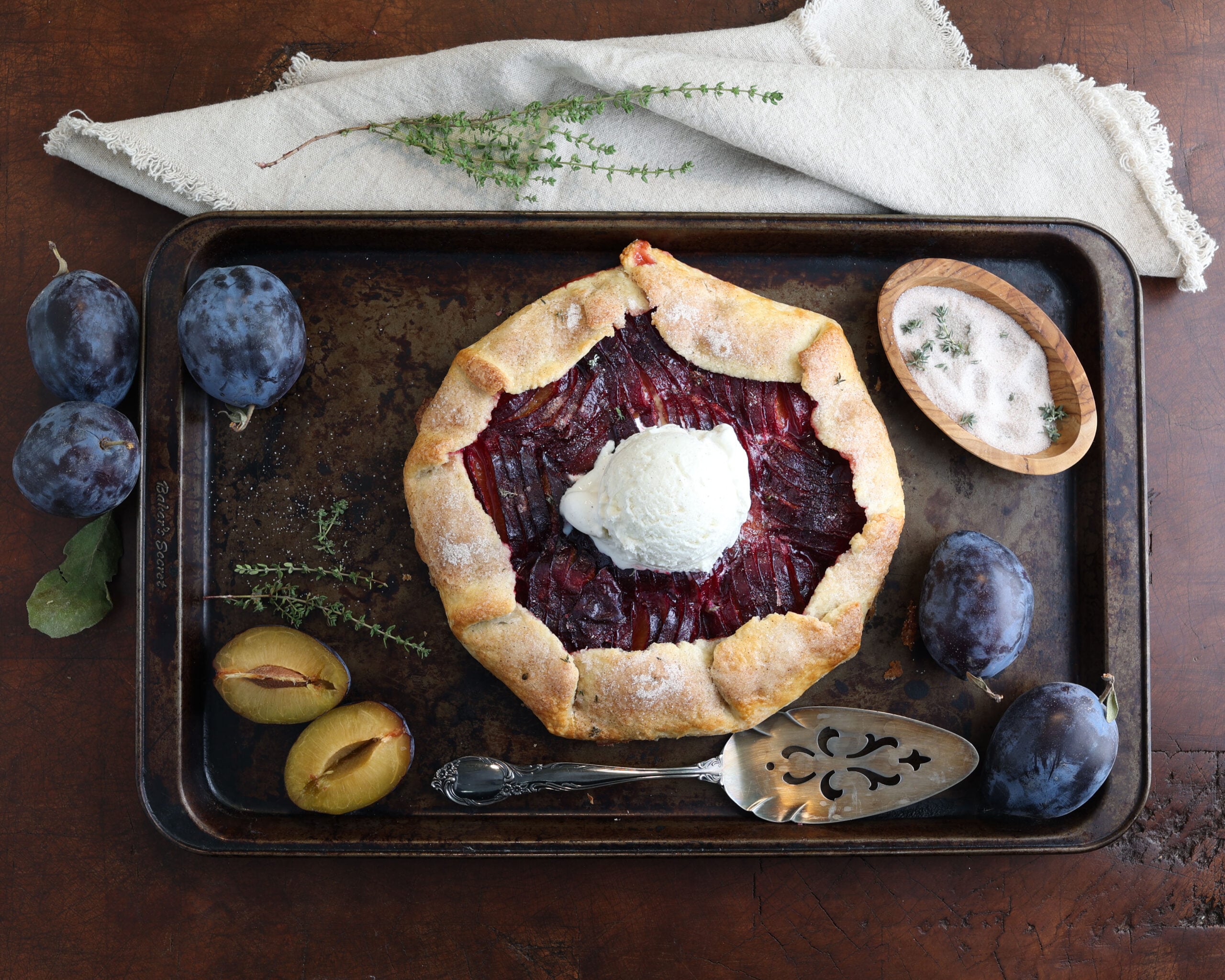
This plum galette wraps deep-purple Empress plums, fresh thyme, and warm spices inside a flaky homemade butter crust. The plums bake into a glossy, jammy filling while their pale flesh and dark skins create a beautiful late-summer contrast.
Jump to Recipe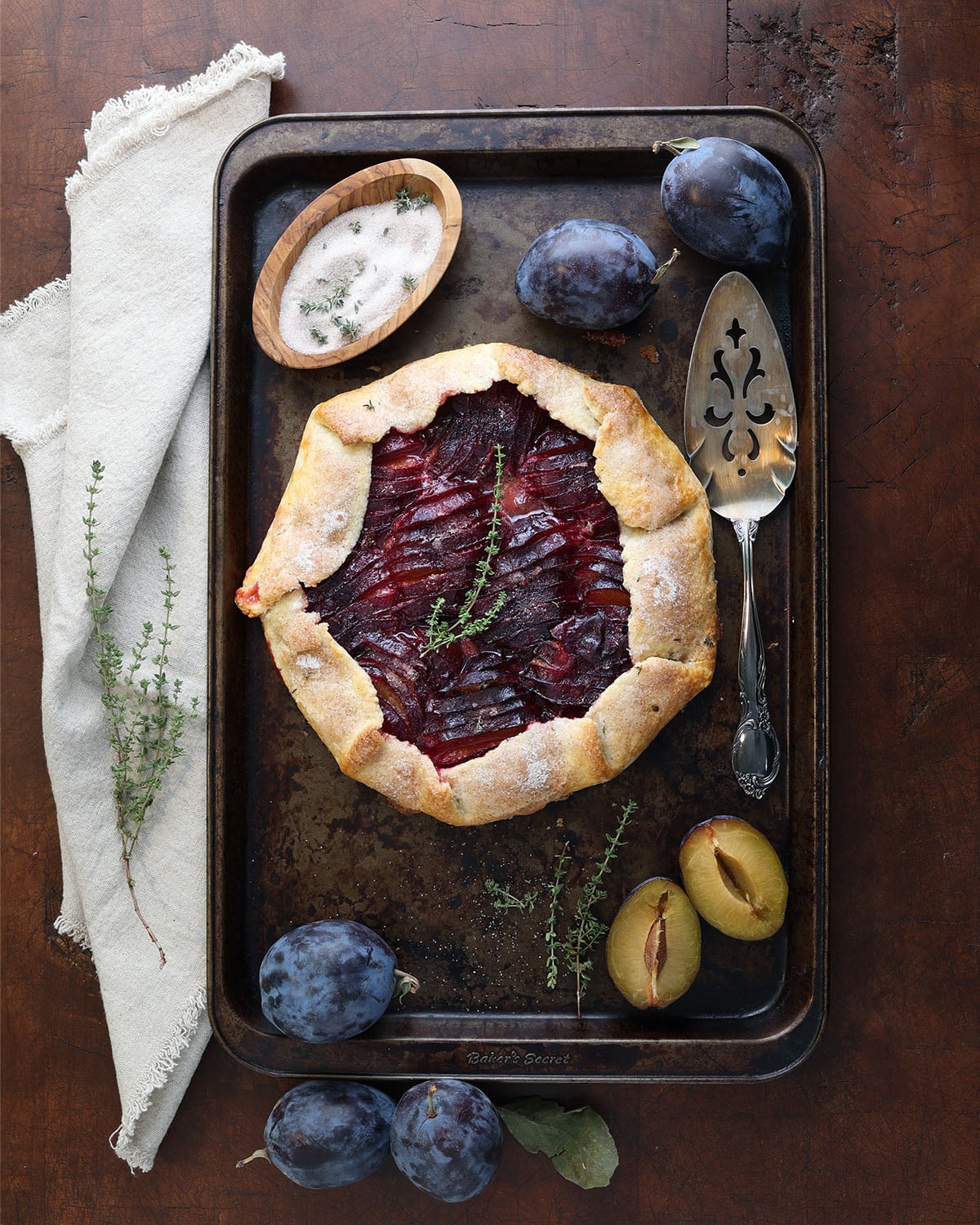
WHY YOU’LL LOVE THIS PLUM GALETTE
A galette gives you everything wonderful about fruit pie without asking for perfect edges or elaborate pastry work. The dough folds naturally around the fruit, making every galette a little different.
Here, ripe plums soften into a glossy, jammy filling scented with fresh thyme, cinnamon, and just a whisper of cardamom. The herbs keep the sweetness interesting, while the buttery crust adds crisp contrast.
Better yet, this recipe teaches a few pastry techniques you can carry into almost any fruit galette. You will learn how to manage juicy fruit, keep butter cold, and create a filling that thickens naturally as it bakes.
Jump to:
- WHY YOU’LL LOVE THIS PLUM GALETTE
- WHAT IS A PLUM GALETTE?
- INGREDIENTS FOR THIS PLUM GALETTE WITH THYME
- HOW TO MAKE THIS PLUM GALETTE
- EXPERTISE FROM MY KITCHEN: WHY THIS PLUM GALETTE WORKS
- WHEN THIS RECIPE SHINES!
- HARVEST FACTS
- KEEP YOUR LATE-SUMMER KITCHEN COOKING WITH ME
- FEATURED FARMER: Frog Hollow Farm
- EQUIPMENT NEEDED
- Plum Galette with Thyme and Flaky Butter Crust
- FREQUENTLY ASKED QUESTIONS
- HOW DO YOU KEEP A PLUM GALETTE FROM GETTING SOGGY?
- DO PLUMS NEED TO BE PEELED FOR A GALETTE?
- WHAT PLUMS ARE BEST FOR A GALETTE?
- CAN I MAKE A PLUM GALETTE AHEAD?
- SHOULD A PLUM GALETTE BE SERVED WARM OR COLD?
- DIETARY CONSIDERATIONS
WHAT IS A PLUM GALETTE?
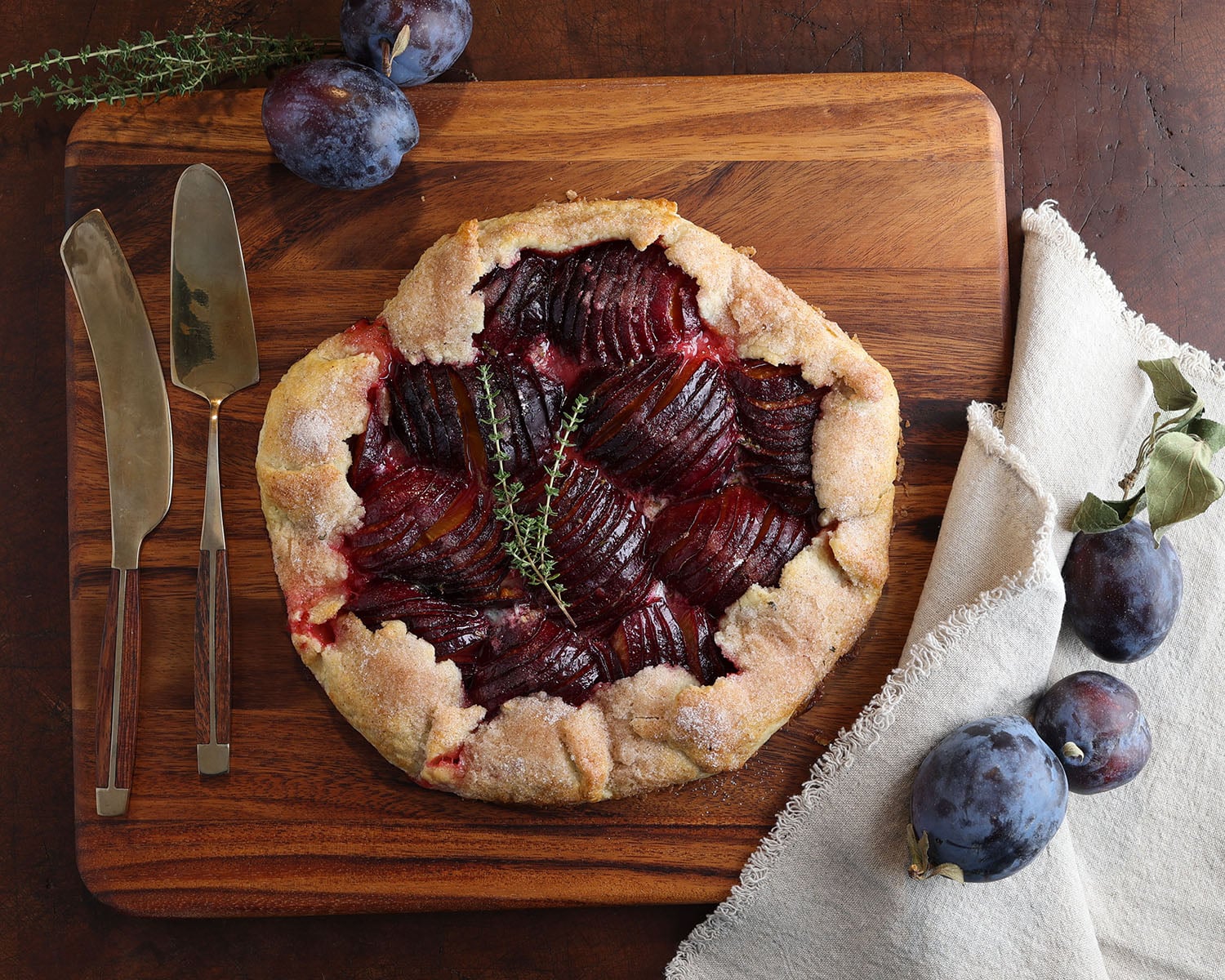
A plum galette is a free-form fruit tart made by arranging sliced plums over rolled pastry dough, then folding the edges around the filling before baking.
Unlike a traditional pie, a galette does not require a pie plate or carefully crimped edges. Its exposed center allows the fruit to roast, soften, and concentrate while the pastry becomes crisp and golden.
That relaxed construction is part of its charm. Think of it as pie with fewer rules.
INGREDIENTS FOR THIS PLUM GALETTE WITH THYME
It is especially satisfying bringing home freshly picked Empress plums from a nearby farm stand and turning them into a simple, shareable dessert. Their deep purple skins and pale flesh are striking before they ever reach the oven, and I love pairing that beautiful fruit with fresh thyme, warm spice, and a flaky butter crust.
- All-Purpose Flour: Flour gives the homemade galette crust its structure while keeping the pastry tender enough to fold around the fruit. A small amount beneath the plums also helps thicken their juices as they bake.
- Granulated Sugar: Sugar lightly sweetens both the pastry and the plum filling without overwhelming the fruit. It also helps the exposed crust brown and develop a delicate crisp finish.
- Kosher or Fine Sea Salt: Salt balances the sweetness and sharpens the buttery flavor of the pastry. Even a small amount helps the crust taste more complete.
- Butter: Cold butter creates flaky layers in the pastry as its moisture turns to steam in the hot oven. Butter scattered over the plums also enriches the fruit juices as they thicken into a glossy filling.
- Ice Water: Ice water brings the pastry dough together while helping the butter stay cold. Keeping the dough cool is essential for a flaky rather than dense crust.
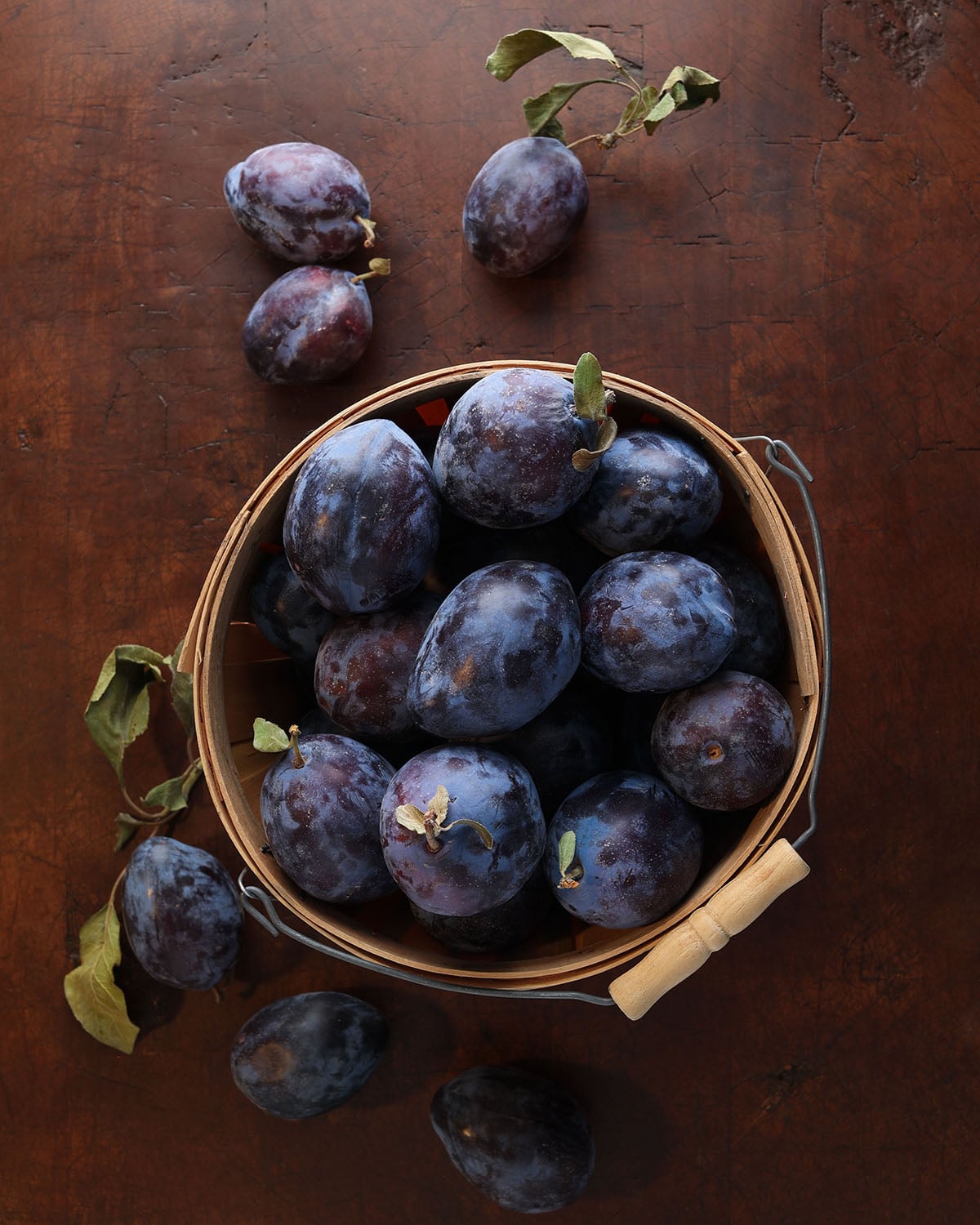
- Plums: Use ripe but firm red, black, or purple plums, such as Empress, Santa Rosa, or Italian plums, so the fruit holds some shape while baking. I use deep-purple Empress plums with pale flesh for their sweet-tart flavor, firm texture, and beautiful contrast.
- Ground Cinnamon: Cinnamon adds gentle warmth that complements the natural sweetness and acidity of ripe plums. The small amount keeps the spice in the background rather than masking the fruit.
- Ground Cardamom: Cardamom contributes a subtle floral and citrus-like complexity to the plum filling. A restrained pinch is enough to make the fruit taste more layered without becoming distinctly spiced.
- Fresh Thyme: Fresh thyme adds a delicate earthy, herbal note that works especially well with stone fruit. It gives this plum galette with thyme a savory edge that keeps the sweetness balanced.
- Milk: Milk brushed over the pastry encourages a golden, evenly browned crust. It also helps the finishing sugar adhere to the folded edges.
HOW TO MAKE THIS PLUM GALETTE
I love how forgiving a galette feels once the dough hits the baking sheet. You can fold it loosely around the plums, let the edges stay a little rustic, and still end up with a dessert that feels generous and beautiful enough to share.
Make the Crust
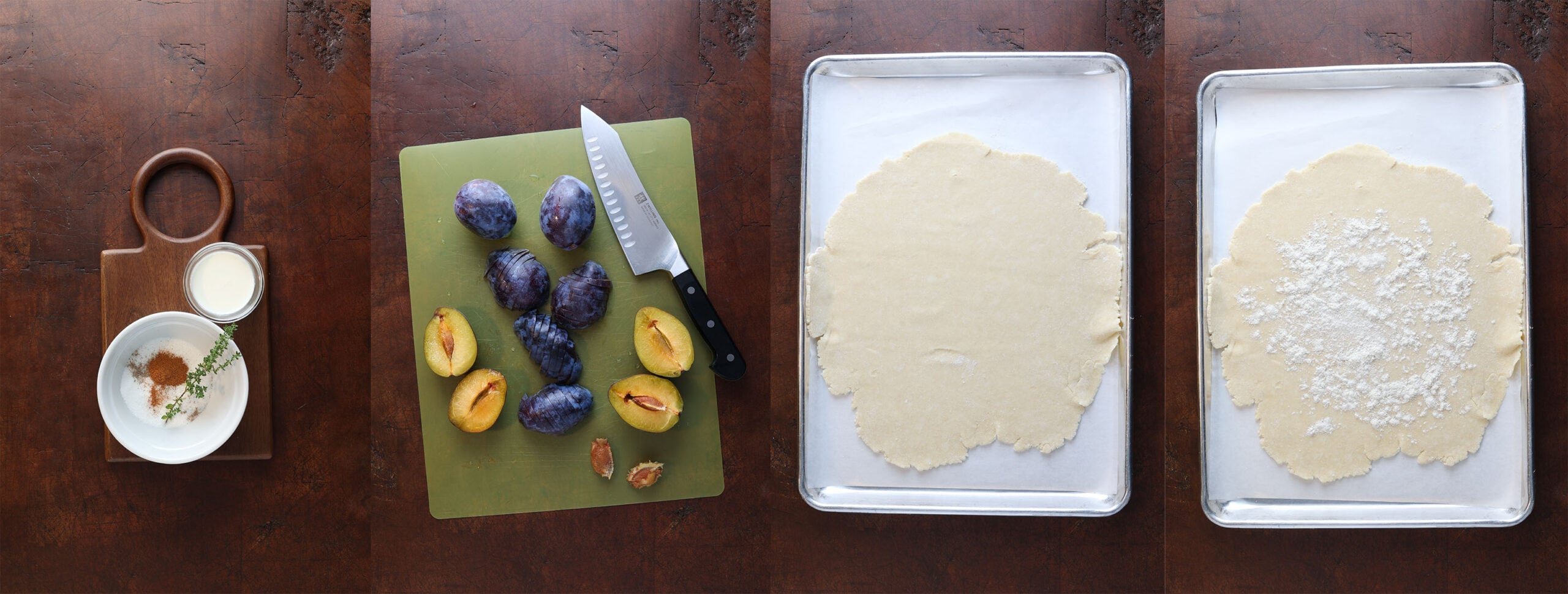
- Preheat the oven. Heat the oven to 400°F (204°C). Line a large baking sheet with parchment paper.
- Combine the dry ingredients. Add the flour, sugar, and salt to a food processor. Pulse briefly to combine.
- Cut in the butter. Add the cold cubed butter. Pulse in short, 1-second bursts about 10 times, until the butter is broken into pea-size pieces.
- Add the ice water. Add ¼ cup of the ice water and pulse several times. Add the remaining tablespoon only if needed. The dough should look crumbly but hold together when firmly pinched between your fingers.
- Gather the dough. Lay a clean tea towel on the work surface and pour the dough into the center. Bring the four corners of the towel together and twist gently to compress the crumbs into a rough ball.
- Shape and roll. Turn the dough onto a lightly floured surface and press it into a disk. Roll into a roughly 12-inch (30 cm) circle about ⅛ inch (3 mm) thick.
Assemble the Galette
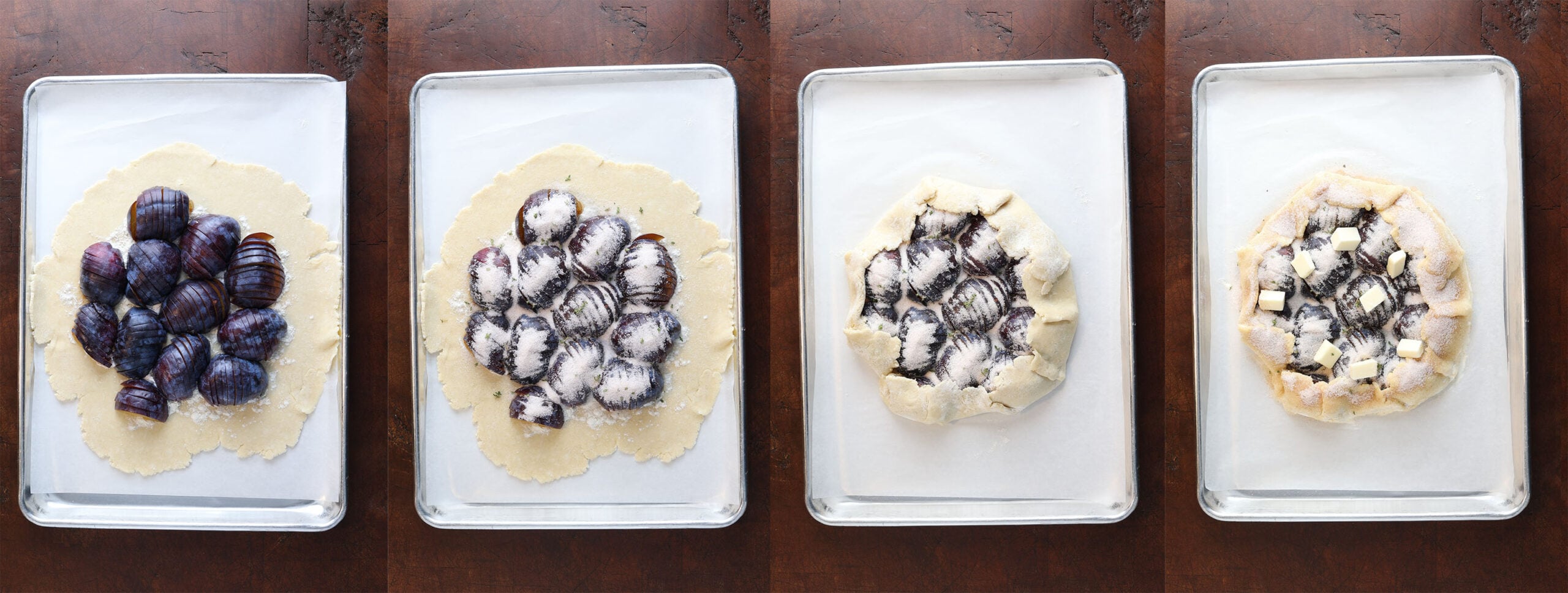
- Transfer the crust. Carefully move the rolled dough onto the parchment-lined baking sheet before adding the filling.
- Create a moisture barrier. Sprinkle the 3 tablespoons flour evenly over the center of the dough, leaving a 2-inch (5 cm) border around the edge. This helps absorb the plum juices as the galette bakes.
- Arrange the plums. Layer the sliced plums over the floured portion of the dough, keeping the outer border uncovered.
- Season the fruit. Combine ¼ cup of the sugar with the cinnamon, cardamom, and fresh thyme. Sprinkle evenly over the plums.
- Add the butter. Scatter the cold butter cubes over the fruit.
- Fold the crust. Fold the exposed dough up and over the outer edge of the plums, pleating the dough as you work around the galette. Leave the center open.
- Finish the crust. Brush the folded pastry lightly with milk. Sprinkle the remaining 1 tablespoon sugar over the crust.
- Bake until deeply golden. Bake for about 35 minutes, until the crust is crisp and golden brown and the plum juices are bubbling in the center.
- Cool before slicing. Let the galette cool on the baking sheet for about 30 minutes. This gives the plum juices time to thicken slightly before serving.
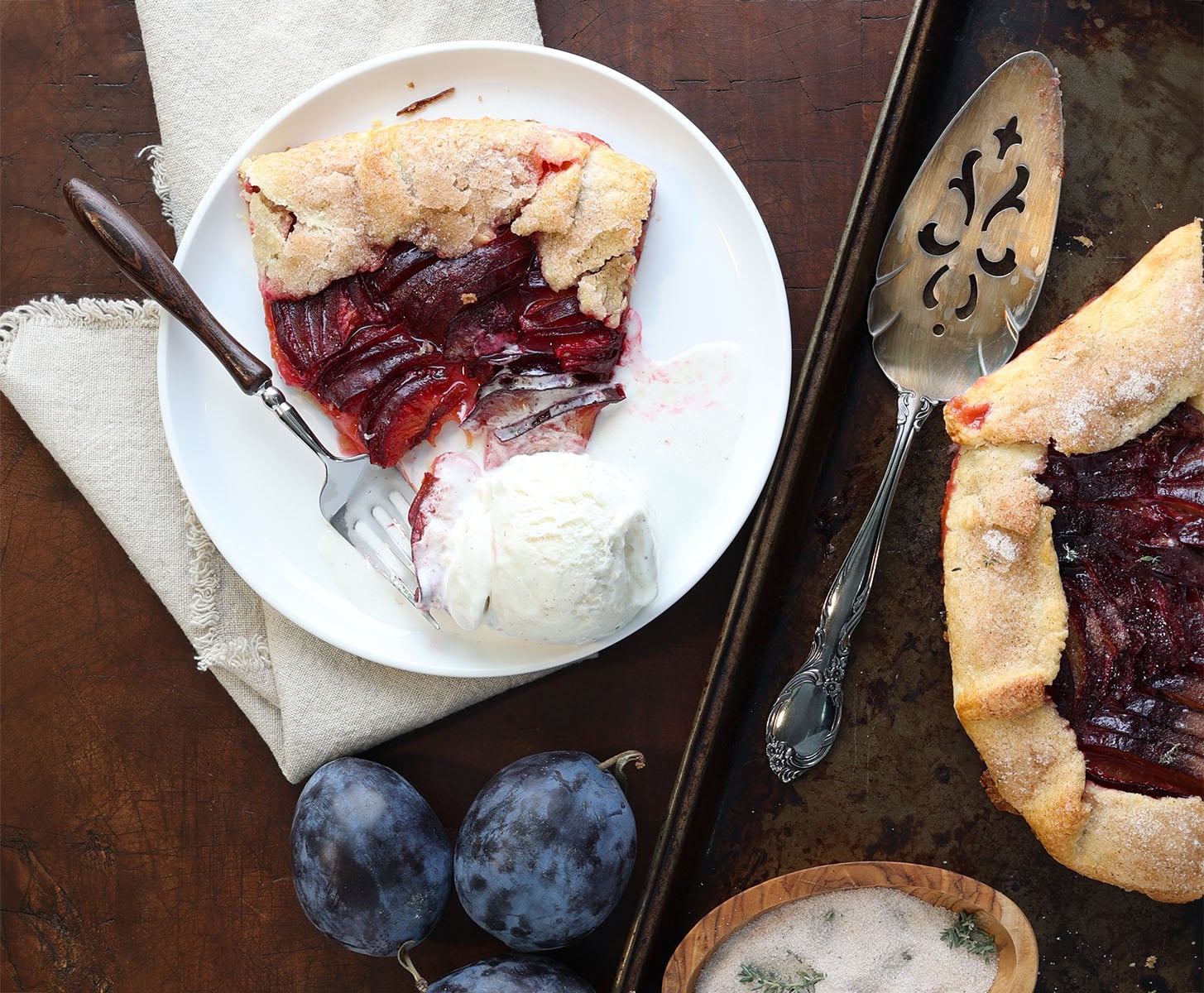
- Serve. Enjoy warm or at room temperature, as is, with softly whipped cream, or with a scoop of vanilla ice cream.
EXPERTISE FROM MY KITCHEN: WHY THIS PLUM GALETTE WORKS
Years of professional baking and recipe development have taught me that rustic pastry is only truly simple when you understand what the ingredients are doing. This plum galette depends on three small decisions that give you flaky pastry, concentrated fruit, and a filling that holds together when sliced.
KEEP THE BUTTER COLD
Cold butter creates the flaky structure of the galette crust. As the pastry bakes, water in those cold butter pieces turns to steam, helping create separation and tenderness within the dough.
GIVE THE PLUM JUICES SOMETHING TO THICKEN WITH
The flour beneath the plums catches the juices released during baking. As the flour hydrates and heats with the plum juices and sugar, it thickens the liquid into a glossy, lightly jammy filling instead of allowing it to soak into the crust.
CHOOSE RIPE BUT FIRM PLUMS
Ripe fruit gives you the best plum flavor, but overly soft plums can release too much liquid and lose their shape. Firm-fleshed Empress plums soften beautifully in the oven while still giving the finished galette structure.

WHEN THIS RECIPE SHINES!
This plum galette feels especially right as summer begins to lean toward fall. Empress plums arrive late in the season, just when ripe stone fruit still fills farm stands but cooler evenings make a warm, flaky pastry especially welcome.
Season: Late Summer, Early Autumn
Months: August, September, early October
Fun Fact - Fruit Bloom
That dusty white coating on purple plums is not dirt or pesticide residue. It is a natural waxy layer called bloom, which helps the fruit resist moisture loss, so handle freshly picked plums gently and wash them just before using rather than scrubbing them during storage.
HARVEST FACTS
Plums are a late-summer fruit, with harvest timing stretching from midsummer into early autumn depending on the variety. In general, Japanese plums arrive earlier, while European plums tend to ripen later in the season.
WHEN ARE PLUMS IN SEASON?
Most plums are harvested from July through September, although very late cultivars can continue into early October. Empress is a late-season European plum, which makes September an especially good time to look for it at orchards and farm stands.
HOW DO YOU KNOW WHEN A PLUM IS RIPE?
Color varies too much by cultivar to be the only guide. A ripe plum should begin to soften slightly and taste sweet and juicy, while European plums are generally harvested as they start to soften.
HOW TO STORE FRESH PLUMS
Let near-ripe plums finish ripening at room temperature. Once ripe, move them to the refrigerator to slow further softening and preserve quality.
WHY EMPRESS PLUMS ARE SPECIAL
Empress plums are a very late-season European variety with deep purple skin and dense flesh. Their firm texture makes them particularly well suited to baking, where they can soften without immediately collapsing into the filling.
KEEP YOUR LATE-SUMMER KITCHEN COOKING WITH ME
If this plum galette has you looking at every basket of stone fruit a little differently, stay in the season with me. Bake my Italian Plum Pie with Lime when you want those fleeting plums tucked into a full buttery crust, or turn ripe peaches into my Peach Coffee Cake for a tender, fruit-filled bake made for slow mornings. And if you have truly beautiful peaches on hand, make my Fresh Peach Cream Pie, the #1 most-requested recipe on Bite Me Industries and one of my favorite ways to let peak-season peaches take center stage.
For something lighter, warm a nectarine with thyme for my Caramelized Nectarine and Crispy Quinoa Yogurt Bowl. And while the last great tomatoes are still piled high at the farm stand, carry that same rustic galette spirit into my Mini Tomato Galettes with Herby Goat Cheese.
Late summer never seems to last long enough, so cook with it while it is here. Keep following the harvest with me, and let’s see what the next farm stand brings to the kitchen.

FEATURED FARMER: Frog Hollow Farm
The Empress plums in this galette came from Tagge’s Famous Fruit Farm, one of the farms that continually reminds me how extraordinary fruit can be when we stay connected to the people growing it. Today, I also want to take you beyond my own farm stand and introduce you to Frog Hollow Farm in Brentwood, California.
Farmer Al Courchesne started Frog Hollow Farm in 1976 on just 13 acres after returning from Hawaii, where he had been a high school history teacher. The farm earned its name from the chorus of frogs that once called from a nearby pond at sunrise and sunset.
What I love most is their commitment to letting fruit taste like fruit. Rather than picking primarily for shipping durability, Frog Hollow allows its stone fruit to ripen on the tree, and Farmer Al still walks the orchard as harvest approaches, checking for the flavor and ripeness he wants. That same connection to harvest extends into the local community through their CSA, giving members a more direct relationship with the fruit, the farm, and the rhythm of the growing season.
Today, Frog Hollow grows an extraordinary collection of stone and tree fruits, including plums, peaches, nectarines, apricots, and pluots. Their story is a lovely reminder that before a plum ever reaches our cutting board, someone has spent a season watching the tree, tending the soil, and waiting for the right moment to pick.
Honor the farmer, and the fruit begins to mean a little more.
EQUIPMENT NEEDED
- Food processor
- Rolling pin
- Large baking sheet
- Parchment paper
- Pastry brush
- Chef’s knife
- Cutting board
- Measuring cups and spoons
- Digital kitchen scale, recommended

Plum Galette with Thyme and Flaky Butter Crust
Ingredients
For The Crust
- 1 ¼ cups all-purpose flour (160 g)
- 1 tablespoon granulated sugar (14 g)
- ¼ teaspoon kosher (1 g) or fine sea salt
- 8 tablespoons cold butter (113 g) cut into small cubes
- ¼ cup ice water (75 g) + 1 tablespoon; as needed
For the Plum Filling
- 3 tablespoons all-purpose flour (24 g)
- 6 medium red or black plums (about 570 g) halved, pitted, and cut into ⅛-inch (3 mm) slices
- ¼ cup granulated sugar (63 g) divided, + 1 tablespoon
- ¼ teaspoon ground cinnamon (0.6 g)
- Pinch ground cardamom (0.1 g)
- 1 teaspoon fresh thyme leaves (1 g)
- 1 ½ tablespoons cold butter (21 g) cut into small cubes
- 1 tablespoon milk (15 g) for brushing
Instructions
Make The Crust
- Preheat the oven. Heat the oven to 400°F (204°C). Line a large baking sheet with parchment paper.
- Combine the dry ingredients. Add the flour, sugar, and salt to a food processor. Pulse briefly to combine.
- Cut in the butter. Add the cold cubed butter. Pulse in short, 1-second bursts about 10 times, until the butter is broken into pea-size pieces.
- Add the ice water. Add ¼ cup of the ice water and pulse several times. Add the remaining tablespoon only if needed. The dough should look crumbly but hold together when firmly pinched between your fingers.
- Gather the dough. Lay a clean tea towel on the work surface and pour the dough into the center. Bring the four corners of the towel together and twist gently to compress the crumbs into a rough ball.
- Shape and roll. Turn the dough onto a lightly floured surface and press it into a disk. Roll into a roughly 12-inch (30 cm) circle about ⅛ inch (3 mm) thick.
Assemble the Galette
- Transfer the crust. Carefully move the rolled dough onto the parchment-lined baking sheet before adding the filling.
- Create a moisture barrier. Sprinkle the 3 tablespoons flour evenly over the center of the dough, leaving a 2-inch (5 cm) border around the edge. This helps absorb the plum juices as the galette bakes.
- Arrange the plums. Layer the sliced plums over the floured portion of the dough, keeping the outer border uncovered.
- Season the fruit. Combine ¼ cup of the sugar with the cinnamon, cardamom, and fresh thyme. Sprinkle evenly over the plums.
- Add the butter. Scatter the cold butter cubes over the fruit.
- Fold the crust. Fold the exposed dough up and over the outer edge of the plums, pleating the dough as you work around the galette. Leave the center open.
- Finish the crust. Brush the folded pastry lightly with milk. Sprinkle the remaining 1 tablespoon sugar over the crust.
- Bake until deeply golden. Bake for about 35 minutes, until the crust is crisp and golden brown and the plum juices are bubbling in the center.
- Cool before slicing. Let the galette cool on the baking sheet for about 30 minutes. This gives the plum juices time to thicken slightly before serving.
- Serve. Enjoy warm or at room temperature, as is, with softly whipped cream, or with a scoop of vanilla ice cream.
Notes
- Keep the butter cold. Cold butter creates pockets of steam as the galette bakes, giving the crust its flaky texture. If the dough becomes noticeably soft or warm while you are working with it, refrigerate it briefly before assembling.
- Use ripe but firm plums. The best plums for a galette have developed good flavor but are still firm enough to slice cleanly. Very soft plums release more liquid and can make the center of the crust soggy.
- Don’t skip the flour beneath the fruit. That thin layer helps capture the juices released by the plums and creates a more concentrated, jammy filling.
- Storage: Fruit galettes are best the day they are baked. Store leftovers loosely covered at room temperature for up to 2 days. For a crisper crust, reheat individual slices in a 325°F (163°C) oven for 5 to 10 minutes.

Nutrition
FREQUENTLY ASKED QUESTIONS
HOW DO YOU KEEP A PLUM GALETTE FROM GETTING SOGGY?
Sprinkle a thin layer of flour over the pastry before adding the plums. As the fruit releases juice, the flour combines with the plum juices, sugar, and butter to create a lightly thickened filling.
DO PLUMS NEED TO BE PEELED FOR A GALETTE?
No. Plum skins soften as they bake and contribute color, flavor, and structure to the filling.
WHAT PLUMS ARE BEST FOR A GALETTE?
Red, black, and Italian plums can all work well. Choose ripe but firm fruit that has good flavor and can still be sliced cleanly.
CAN I MAKE A PLUM GALETTE AHEAD?
A fruit galette is best the day it is baked. You can prepare the pastry dough ahead and keep it refrigerated until you are ready to assemble and bake.
SHOULD A PLUM GALETTE BE SERVED WARM OR COLD?
Serve it warm or at room temperature. Allow at least 30 minutes of cooling after baking so the hot fruit juices have time to thicken before slicing.
DIETARY CONSIDERATIONS
The dietary categories below are provided as a quick reference to help you determine whether this recipe may fit your dietary preferences. They are intended as a helpful guide, not as medical or nutritional advice. Individual ingredients and brands can vary, so always check product labels if you have food allergies, sensitivities, or specific dietary needs.
- DF (Dairy Free): No, the crust contains butter and the finish may use milk or cream.
- EF (Egg Free): YES, when the crust is brushed with milk or cream instead of egg wash.
- GF (Gluten-free): No, the galette crust and filling use all-purpose flour.
- NF (Nut Free): YES, the recipe contains no nuts or nut-based ingredients.
- PB (Plant Based): No, the recipe contains butter and may include milk, cream, or egg.
- SF (Sugar Free): No, granulated sugar is used in the crust, filling, and finish.
- VE (Vegetarian): YES, the recipe contains no meat, poultry, seafood, or animal-derived gelatin.
- VG (Vegan): No, the recipe contains butter and may include dairy or egg.
- Paleo: No, the recipe contains wheat flour, refined sugar, and dairy.
- Keto: No, the flour, plums, and sugar make this too high in carbohydrates.
- Whole30: No, the recipe contains flour, added sugar, butter, and possibly dairy.

Leave a Reply