
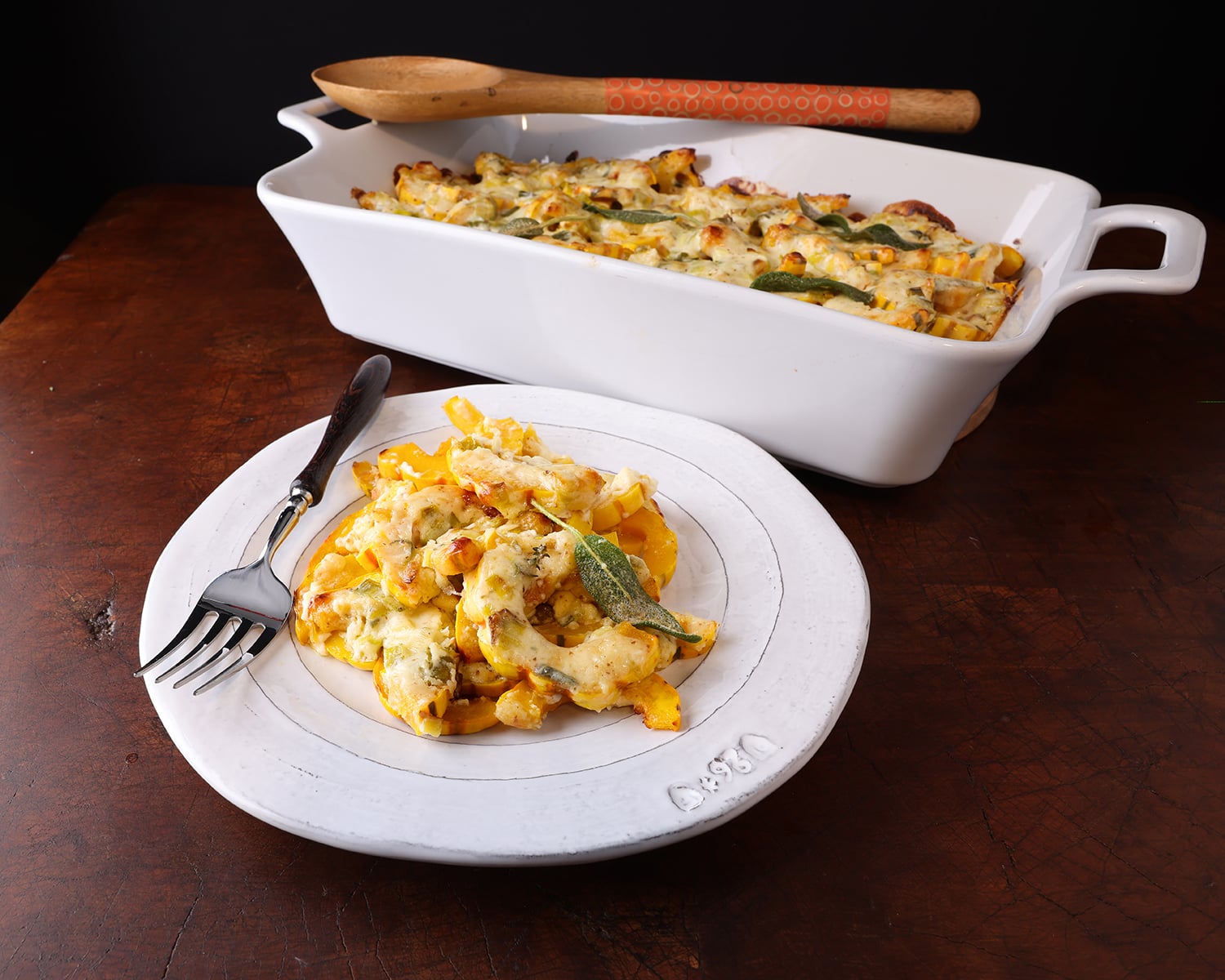
This delicata squash gratin brings tender roasted squash, sweet leeks, fresh herbs, and creamy Gruyère together in one comforting side dish. It's an inviting way to celebrate winter squash, with rich flavor and surprisingly simple preparation.
I first discovered delicata squash in 2022 while making a delicata apple crunch salad, and I was immediately taken with its flavor and versatility. Since then, I've found countless reasons to bring it back to my kitchen, including this gratin, which has become a staple on our holiday table.
Jump to Recipe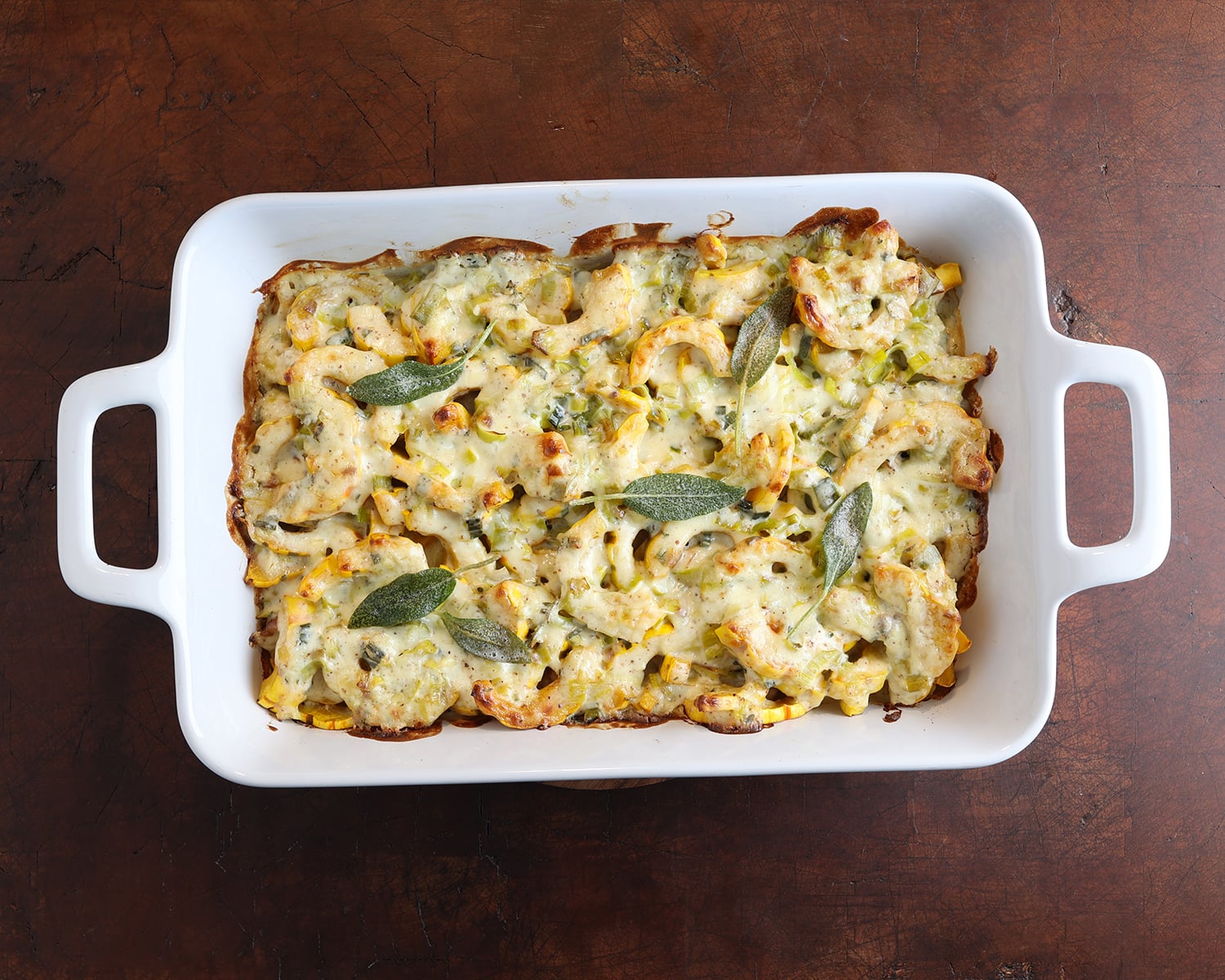
WHY YOU WILL LOVE THIS DELICATA SQUASH GRATIN
A rich, savory fall and winter side dish with no peeling required.
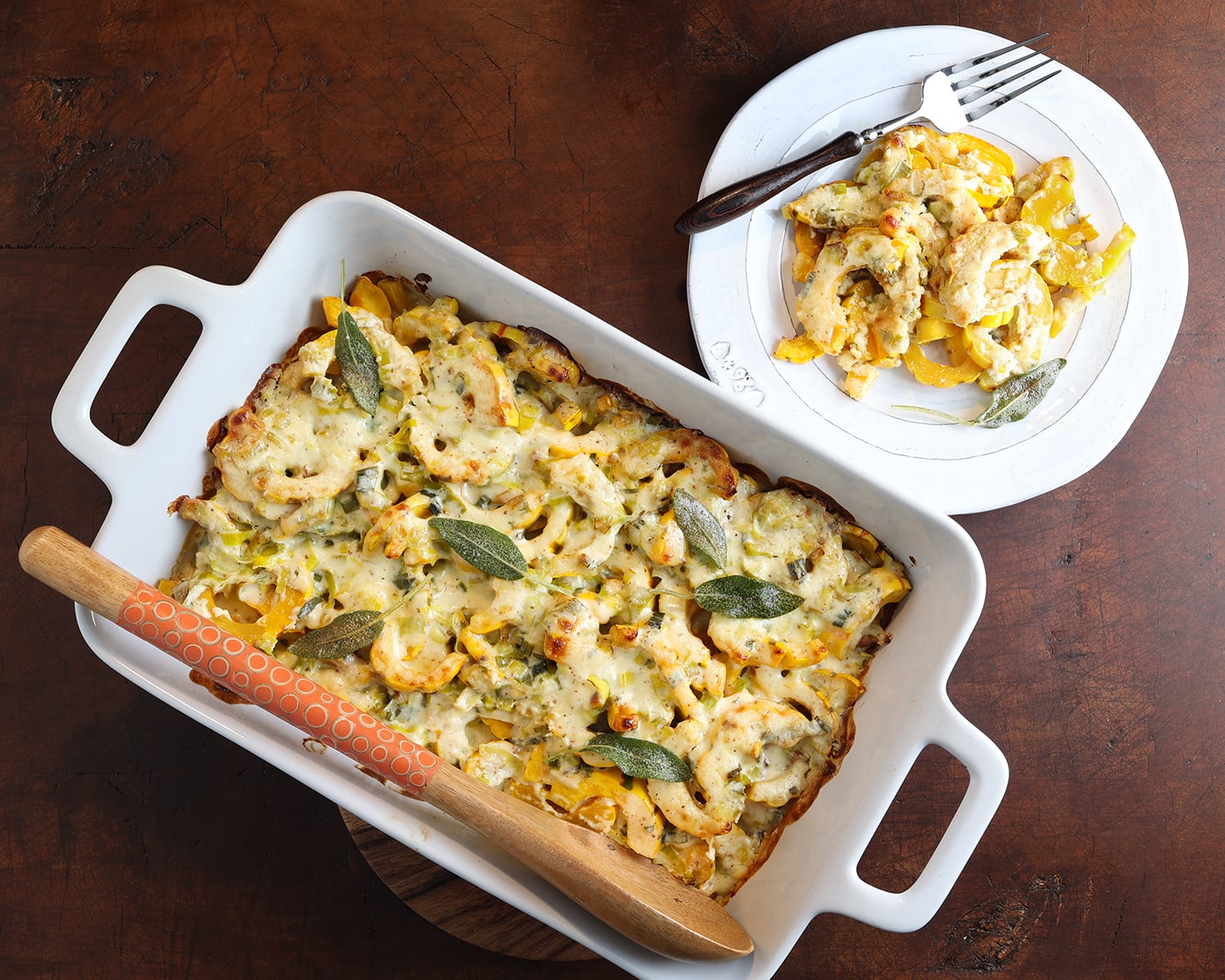
This delicata squash gratin combines tender, caramelized squash, melty Gruyère, and fragrant herbs beneath a beautifully rustic, golden top. Its naturally imperfect appearance feels warm and inviting, making it just as lovely for a cozy weeknight dinner as a special gathering.
Jump to:
- WHY YOU WILL LOVE THIS DELICATA SQUASH GRATIN
- INGREDIENTS FOR DELICATA SQUASH GRATIN WITH GRUYÈRE
- HOW TO MAKE THIS DELICATA SQUASH GRATIN
- How To Make this Gratin Ahead
- EXPERTISE FROM MY KITCHEN: WHY THIS DELICATA SQUASH GRATIN WORKS
- Top Tender-Skin Squash for Gratins
- WHEN THIS RECIPE SHINES!
- HARVEST FACTS: DISCOVERING DELICATA SQUASH
- KEEP YOUR FALL AND WINTER KITCHEN COOKING WITH ME
- FEATURED FARMER: Gunnell Farm
- EQUIPMENT NEEDED
- Baked Delicata Squash Gratin in a Creamy Gruyère Sauce
- DIETARY CONSIDERATIONS
INGREDIENTS FOR DELICATA SQUASH GRATIN WITH GRUYÈRE
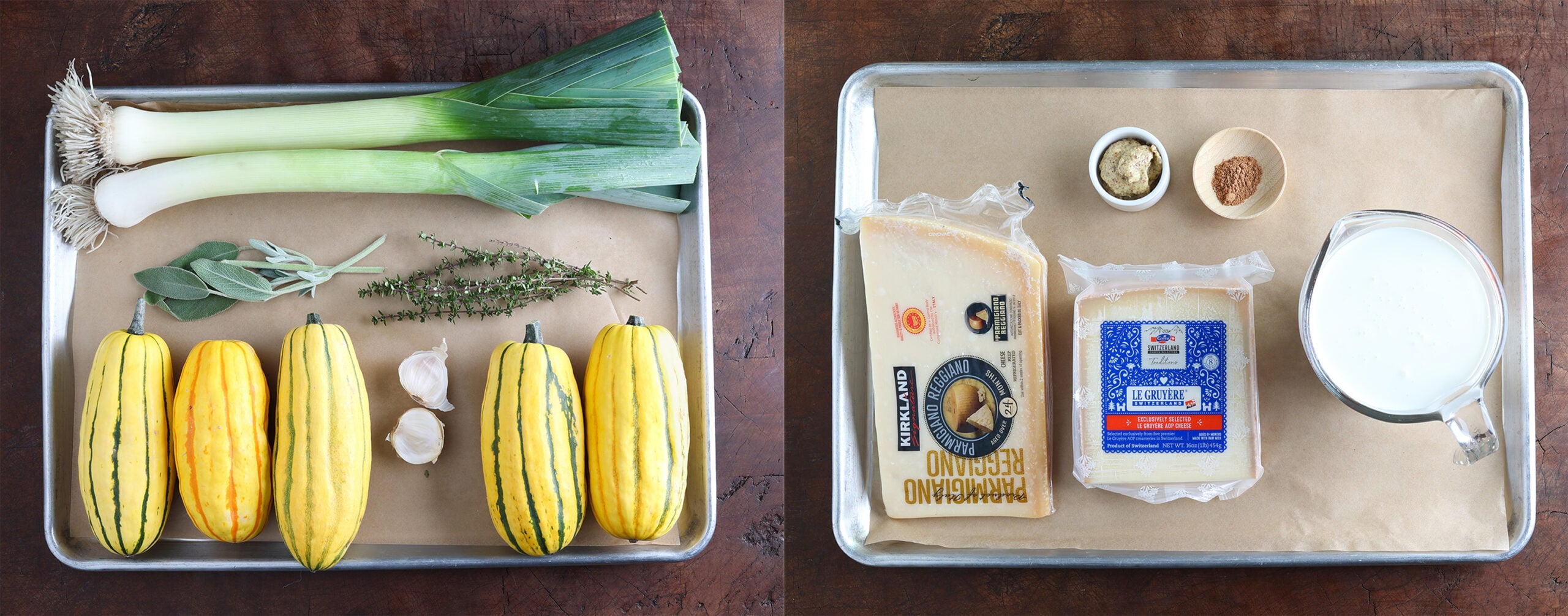
One of the things I enjoy most about delicata squash is how easily it welcomes other flavors. Here, a few familiar ingredients turn this beautiful fall harvest into something worthy of a holiday gathering.
- Delicata or acorn squash: Delicata has sweet, creamy flesh and thin, edible skin that softens during roasting. Acorn squash also works, although its thicker skin may remain more noticeable.
- Extra-virgin olive oil: Helps the squash roast evenly and develop flavorful edges. Its subtle fruitiness complements the natural sweetness of winter squash.
- Kosher salt: Enhances the squash's natural flavor and balances the rich cheese sauce. Seasoning in stages helps distribute flavor throughout the gratin.
- Salted butter: Gives the leeks a rich, flavorful cooking base. It also contributes a silky mouthfeel to the finished sauce.
- Leeks: Offer delicate onion flavor with a gentle sweetness. Cooking them slowly softens their texture and develops their natural sugars.
- Garlic: Adds savory depth to the cream sauce. Brief cooking releases its aroma without introducing bitterness.
- Fresh sage: Brings earthy, slightly peppery notes that pair beautifully with winter squash. Its distinctive aroma adds warmth to the creamy sauce.
- Fresh thyme: Adds delicate herbal flavor and a subtle woodsy fragrance. It complements sage without overwhelming the squash.
- Heavy cream: Creates the rich foundation for the Gruyère sauce. Its fat content helps produce a smooth, luxurious texture.
- Dijon mustard: Adds gentle acidity and savory complexity. Its sharpness helps balance the richness of cream and cheese.
- Ground nutmeg or mace: Contributes subtle warmth to the cream sauce. Both spices complement dairy, although mace tastes slightly more delicate.
- Gruyère cheese: Offers a nutty, slightly sweet flavor with excellent melting qualities. It creates the signature creamy character of this gratin.
- Parmesan cheese: Adds savory depth and a pleasantly salty finish. Its concentrated umami balances the sweetness of the squash and leeks.
HOW TO MAKE THIS DELICATA SQUASH GRATIN
I love recipes that allow the ingredients to do most of the work. While the squash begins roasting, you can prepare the fragrant leeks and creamy cheese sauce, making the process feel surprisingly manageable.
- Preheat the Oven: Heat the oven to 400°F (200°C) and position a rack in the center.
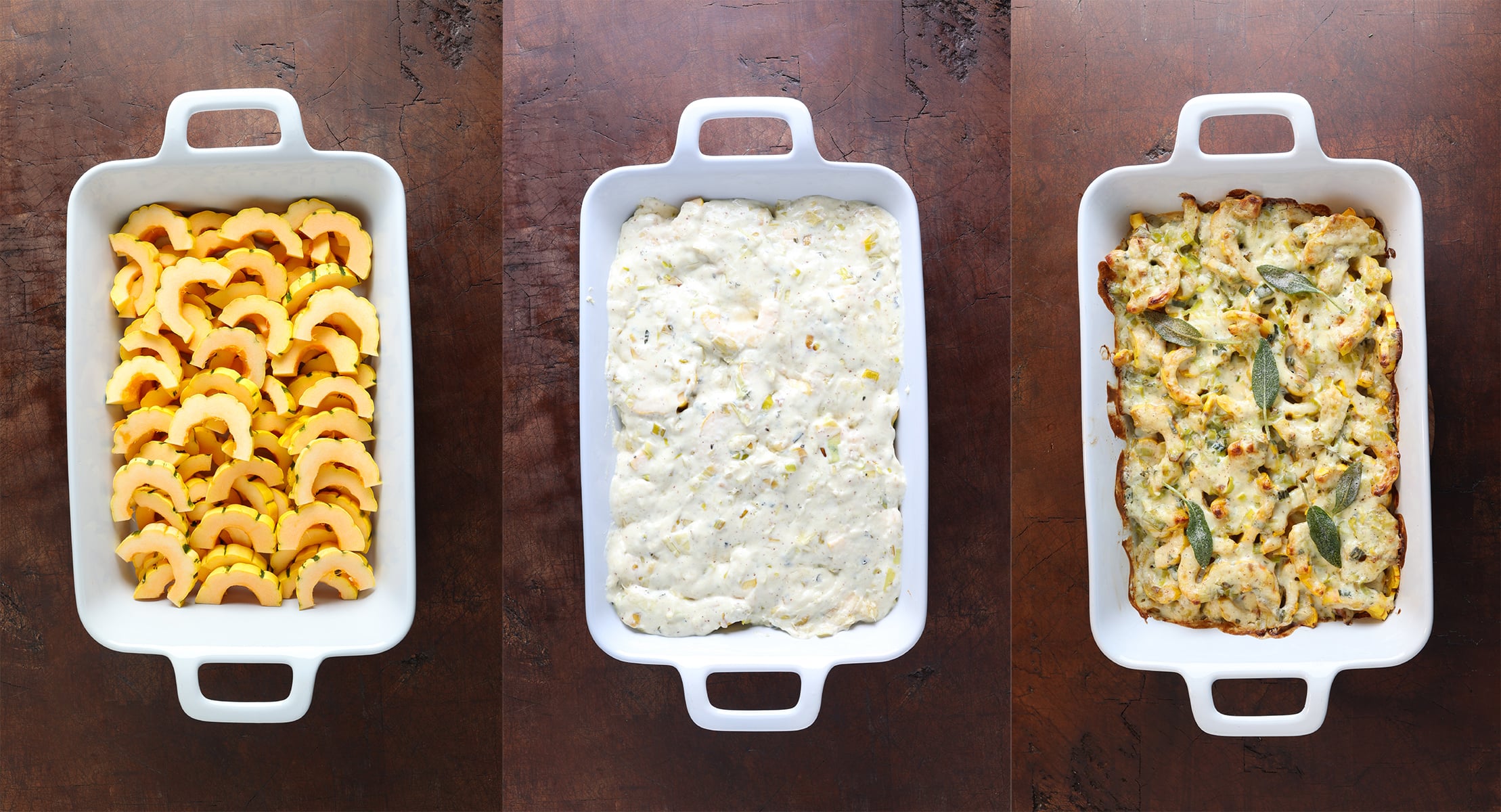
- Roast the Squash: Add the sliced squash to a 9 × 13 inch (23 × 33 cm) baking dish. Drizzle with 1 tablespoon olive oil and sprinkle with 1 teaspoon salt. Toss to coat. Roast for 15 minutes.
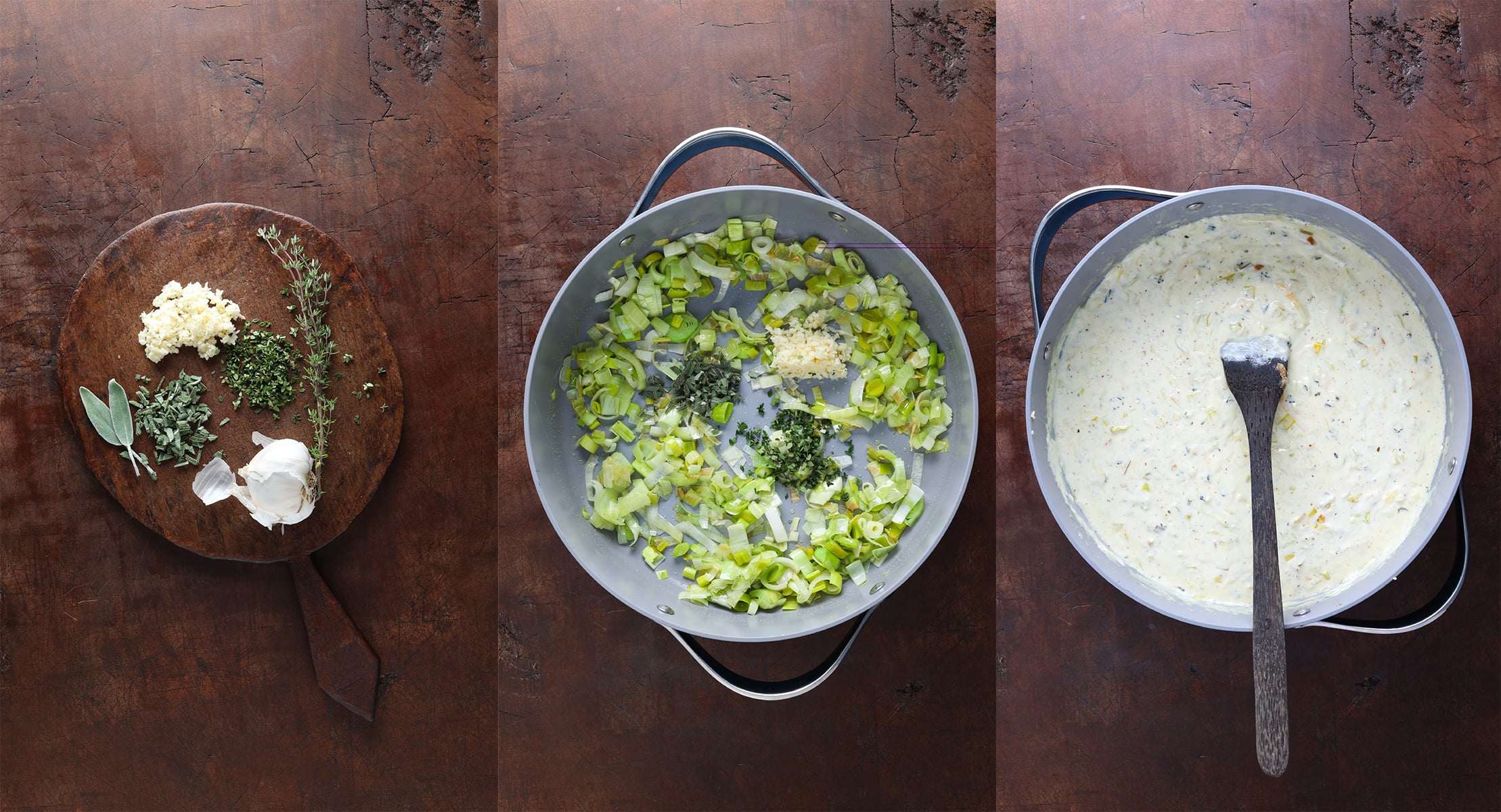
- Cook the Leeks and Herbs: While the squash roasts, melt the butter in a large skillet over medium heat with the remaining 1 tablespoon olive oil. Add the sliced leeks and cook until tender, about 8 minutes, stirring occasionally. Stir in the garlic, sage, and thyme and cook until fragrant, 1 minute.
- Build the Cheese Sauce: Pour in the heavy cream, then add Dijon, nutmeg, and the remaining ½ teaspoon salt. Warm until steaming while stirring often, about 5 minutes. Add the Gruyère and Parmesan and lower the heat. Stir until fully melted and smooth, about 5 minutes.
- Combine and Finish Baking: Remove the squash from the oven. Pour the cheese sauce evenly over the top. Return to the oven and bake until the squash is tender and the sauce has thickened, 15 to 20 minutes.
- Rest and Serve: Allow the gratin to rest for 5 minutes before serving so the sauce settles and clings to the squash.
How To Make this Gratin Ahead
- Roast the squash and prepare the cheese sauce as directed.
- Combine everything in the baking dish.
- Cover and refrigerate up to 24 hours before baking.
- Bake at 400°F (200°C) for 20 to 25 minutes, or until hot and bubbly.
If baking straight from the fridge, add 5 to 8 extra minutes.
EXPERTISE FROM MY KITCHEN: WHY THIS DELICATA SQUASH GRATIN WORKS
One of the pleasures of working with winter squash is understanding how heat transforms its texture and flavor. This recipe uses three simple techniques to balance tender squash, delicate aromatics, and a smooth cheese sauce.
Why Roasting the Squash First Matters
Roasting gives the squash a head start before adding the cream sauce. The exposed surfaces lose some moisture and begin developing deeper flavor.
This helps prevent the cheese sauce from spending too much time in the oven while the squash finishes cooking.
Why Gently Cooking Leeks Makes a Difference
Leeks contain natural sugars that become more noticeable as they soften. Gentle cooking develops their sweetness without the sharpness associated with raw onions.
Be sure to rinse between the layers, where garden soil often hides.
Why Low Heat Makes a Smoother Gruyère Sauce
Cheese contains proteins and fats that behave differently under heat. Excessive heat can cause proteins to tighten and fat to separate, leaving a grainy or oily sauce.
Reducing the heat before adding Gruyère and Parmesan encourages a smoother melt. Freshly grated cheese also incorporates more readily than many packaged shredded cheeses.
Top Tender-Skin Squash for Gratins
- Delicata: Mild, sweet, and caramelizes beautifully. The skin becomes soft and completely edible with roasting or baking.
- Acorn: Deeply ridged and slightly nutty. The skin softens nicely with longer cooking, especially when sliced thin for gratins.
- Kabocha (Japanese Pumpkin): Dense texture and rich, chestnut-like flavor. The dark green skin becomes tender when baked and blends seamlessly into creamy dishes.
- Carnival: A hybrid of acorn and sweet dumpling. The skin softens well and the squash offers a balanced sweet-savory flavor.
- Sweet Dumpling: Small in size with a gentle sweetness and thin skin that turns delicate in the oven, great for wedges or rounds.

WHEN THIS RECIPE SHINES!
Delicata squash is one of those ingredients that makes the transition from summer into fall especially enjoyable. By the time holiday cooking begins, its sweet flavor and tender skin make it a wonderful choice for roasting, baking, and creamy gratins.
This recipe is especially welcome alongside roasted turkey, chicken, or a beautiful holiday vegetable spread. It's equally satisfying as part of a quiet Sunday dinner.
Season: Fall and Winter
Months: September through February, depending on local harvest and storage availability.
Fun Fact: Delicata Squash Can Become Sweeter After Harvest
Here's something interesting about delicata squash. Some of its stored starch converts into sugar after harvest, which can make the flesh taste sweeter during storage.
That's one reason a properly stored winter squash can develop wonderful flavor even weeks after leaving the field.
HARVEST FACTS: DISCOVERING DELICATA SQUASH
Delicata squash belongs to the winter squash family, but its tender skin makes it unusually convenient in the kitchen. Its cream-colored exterior, green stripes, and golden flesh make it easy to recognize at farmers markets.
When Is Delicata Squash in Season?
Delicata squash is typically harvested from late summer through fall, with the main harvest occurring from September through October or November.
Because it stores after harvest, delicata may remain available into winter. Availability depends on growing conditions, storage quality, and the individual farm.
Do You Need to Peel Delicata Squash?
No. Delicata squash has a thin, edible skin that softens during cooking.
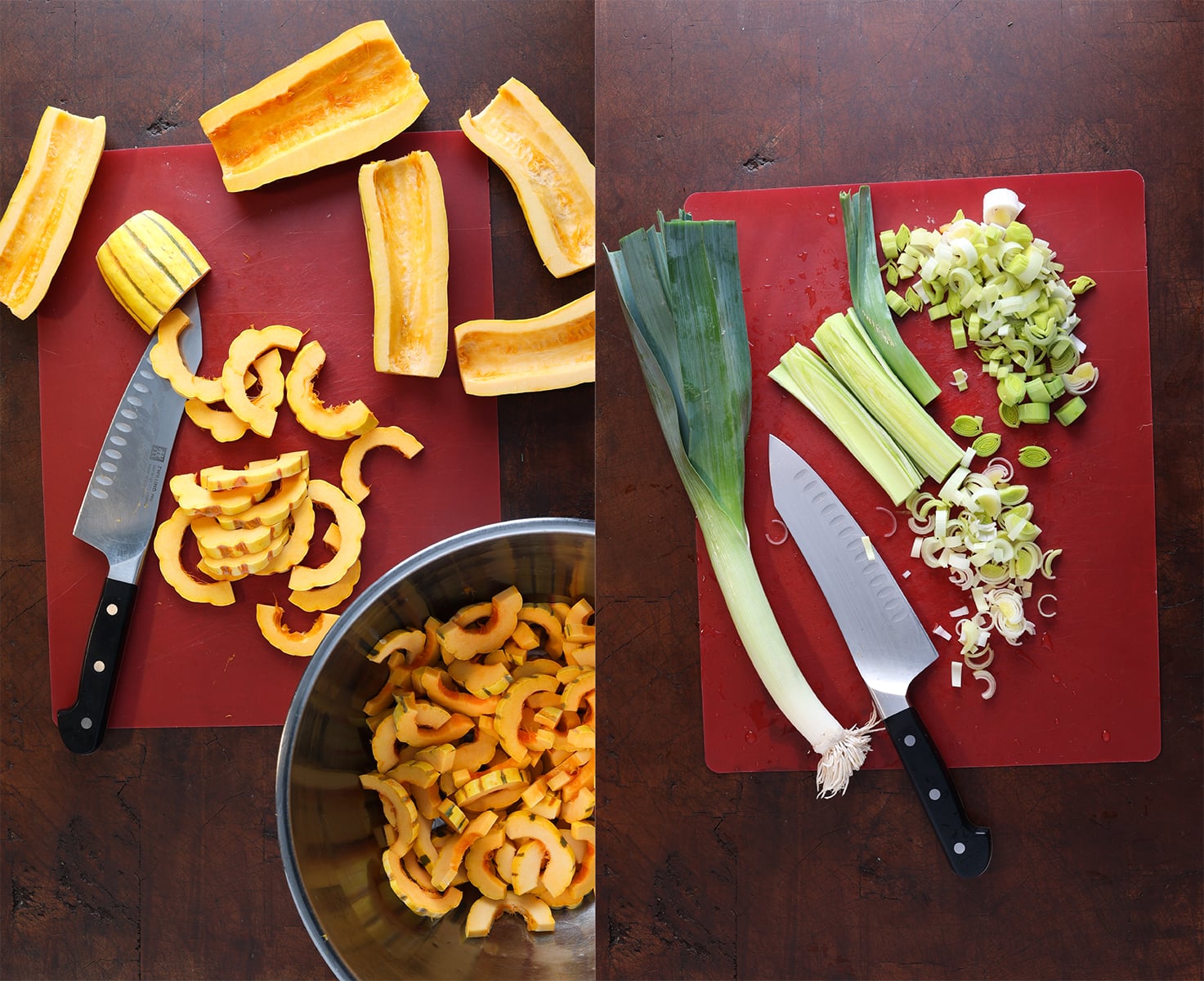
Simply wash the squash, halve it lengthwise, remove the seeds, and slice. Leaving the skin intact also helps the pieces maintain their shape in gratins.
How Do You Choose a Good Delicata Squash?
Look for firm squash with creamy yellow skin and well-defined green or orange stripes. Avoid soft spots, mold, or damaged areas.
Choose squash that feels heavy for its size, with a firm, intact stem when possible.
How Should You Store Delicata Squash?
Keep whole delicata squash in a cool, dry, well-ventilated location away from direct sunlight. Avoid freezing temperatures and excess moisture.
Delicata generally has a shorter storage life than thick-skinned varieties such as butternut. Check stored squash regularly and use any that begin to soften.
KEEP YOUR FALL AND WINTER KITCHEN COOKING WITH ME
My love for delicata squash actually began with my Delicata Squash Salad, and it's still one of my favorite ways to enjoy this beautiful harvest. If you're drawn to the comforting flavors of this gratin, my Butternut Squash Mac and Cheese with Brown Butter and Crispy Sage is another wonderful way to bring winter squash to your table.
And when you're craving something warm and nourishing, a bowl of Roasted Butternut Squash Soup with Cheesy Croutons is a lovely way to celebrate the season.
I hope these recipes inspire you to explore another squash variety, discover a new cooking technique, or bring home something unexpected from your farmers market. There's always more to learn from the harvest, and I'd love for you to keep cooking with me.

FEATURED FARMER: Gunnell Farm
One of the things I appreciate about farmers is their willingness to grow ingredients that invite us to try something new.
At Gunnell Farm in Smithfield, Utah, winter squash is much more than a single familiar variety. Their selection includes delicata, acorn, butternut, kabocha, and several other squash varieties, each offering something different for the kitchen.
The farm describes expanding its selection of culinary squash in response to growing interest. I love that connection between what farmers choose to grow and what home cooks are excited to discover.
The next time you find delicata squash at a farm stand, consider how much variety and care goes into bringing that harvest to market. Sometimes an unfamiliar ingredient is all it takes to inspire a new family favorite.
Learn more about Gunnell Farm.
EQUIPMENT NEEDED
- 9 × 13-inch baking dish
- Large skillet for cooking leeks and preparing the sauce
- Sharp chef's knife for cutting squash
- Sturdy cutting board
- Spoon for removing squash seeds
- Colander for washing leeks
- Measuring cups and spoons
- Cheese grater
- Wooden spoon or silicone spatula
- Oven mitts

Baked Delicata Squash Gratin in a Creamy Gruyère Sauce
Ingredients
- 2½ pounds delicata (1.1 kg) or acorn squash, halved, seeded, and cut into ½-inch slices
- 2 tablespoons extra-virgin olive oil (30 ml)
- ½ teaspoon kosher salt (3 g)
- 4 tablespoons salted butter (56 g)
- 2 large leeks (about 400 g) trimmed, rinsed, and sliced
- 4 cloves garlic minced (12 g)
- 1 tablespoon fresh sage (3 g) about 6 leaves, chopped
- 1 teaspoon fresh thyme leaves (1 g)
- 1 teaspoon Knorr granulated chicken bouillon (4 g)
- 2 cups heavy cream (480 ml)
- 2 teaspoons Dijon mustard (10 g)
- ¼ teaspoon ground nutmeg (0.5 g) or mace
- 1½ cups Gruyère cheese (150 g) freshly grated
- 1 cup Parmesan cheese (100 g) freshly grated
Instructions
- Preheat the Oven: Heat the oven to 400°F (200°C) and position a rack in the center.
- Roast the Squash: Add the sliced squash to a 9 × 13-inch (23 × 33 cm) baking dish. Drizzle with 1 tablespoon olive oil and sprinkle with ½ teaspoon salt. Toss to coat. Roast for 10 minutes.2½ pounds delicata , 2 tablespoons extra-virgin olive oil, ½ teaspoon kosher salt
- Cook the Leeks and Herbs: While the squash roasts, melt the butter in a large skillet over medium heat with the remaining 1 tablespoon olive oil. Add the sliced leeks and cook until tender, about 8 minutes, stirring occasionally. Stir in the garlic, sage, and thyme and cook until fragrant, 1 minute.4 tablespoons salted butter, 2 large leeks, 4 cloves garlic , 1 tablespoon fresh sage, 1 teaspoon fresh thyme leaves
- Build the Cheese Sauce: Add the Dijon mustard, nutmeg, and 1 teaspoon Knorr chicken bouillon to the sautéed leeks and herbs. Give everything a quick stir to combine, then pour in the heavy cream. Heat gently, stirring occasionally, until the cream begins to steam, about 5 minutes. Reduce the heat to low and add the Gruyère and Parmesan. Stir gently until the cheeses are fully melted and the sauce is smooth and creamy, about 5 minutes.1 teaspoon Knorr granulated chicken bouillon, 2 cups heavy cream, 2 teaspoons Dijon mustard, ¼ teaspoon ground nutmeg, 1½ cups Gruyère cheese, 1 cup Parmesan cheese
- Combine and Finish Baking: Remove the squash from the oven and pour the cheese sauce evenly over the top. Return to the oven and bake for 15 to 20 minutes, until the sauce has thickened and the squash is tender but still holds its shape. Begin checking at 15 minutes. The squash should offer just a little resistance when pierced with a fork, rather than becoming overly soft or mushy.
- Rest and Serve: Allow the gratin to rest for 5 minutes before serving so the sauce settles and clings to the squash.
Notes
- Preparing Leeks: Leeks naturally trap soil and grit between their layers, so washing them thoroughly is important. Trim away the dark green tops and root ends, then slice each leek lengthwise down the middle. Rinse under cool running water, gently separating the layers to remove any hidden dirt. Drain well, then cut into ¼-inch slices.

Nutrition
DIETARY CONSIDERATIONS
The dietary categories below are provided as a quick reference to help you determine whether this recipe may fit your dietary preferences. This information is intended for general culinary education and should not be considered medical or individualized nutritional advice. Ingredients and brands can vary, so always verify product labels and consult a qualified healthcare professional when managing food allergies, medical conditions, or specific dietary needs.
- DF (Dairy Free): No. Contains butter, heavy cream, Gruyère, and Parmesan.
- EF (Egg Free): YES No eggs are included in the recipe.
- GF (Gluten-free): YES No gluten-containing ingredients are specified. Verify mustard, cheese, and other packaged ingredient labels.
- NF (Nut Free): YES No nuts are included. Check labels for potential cross-contact.
- PB (Plant Based): No. Contains several dairy ingredients.
- SF (Sugar Free): No. Squash, leeks, and cream contain naturally occurring sugars, although no sugar is added.
- VE (Vegetarian): Depends on the cheeses. Choose Gruyère and Parmesan-style cheeses made with microbial or vegetarian rennet.
- VG (Vegan): No. Contains butter, cream, and cheese.
- Paleo: No. Heavy cream and cheese are not generally Paleo compliant.
- Keto: No. Delicata squash and leeks contribute carbohydrates that may exceed typical keto limits.
- Whole30: No. Butter, cream, and cheese are not Whole30 compliant.

Leave a Reply