
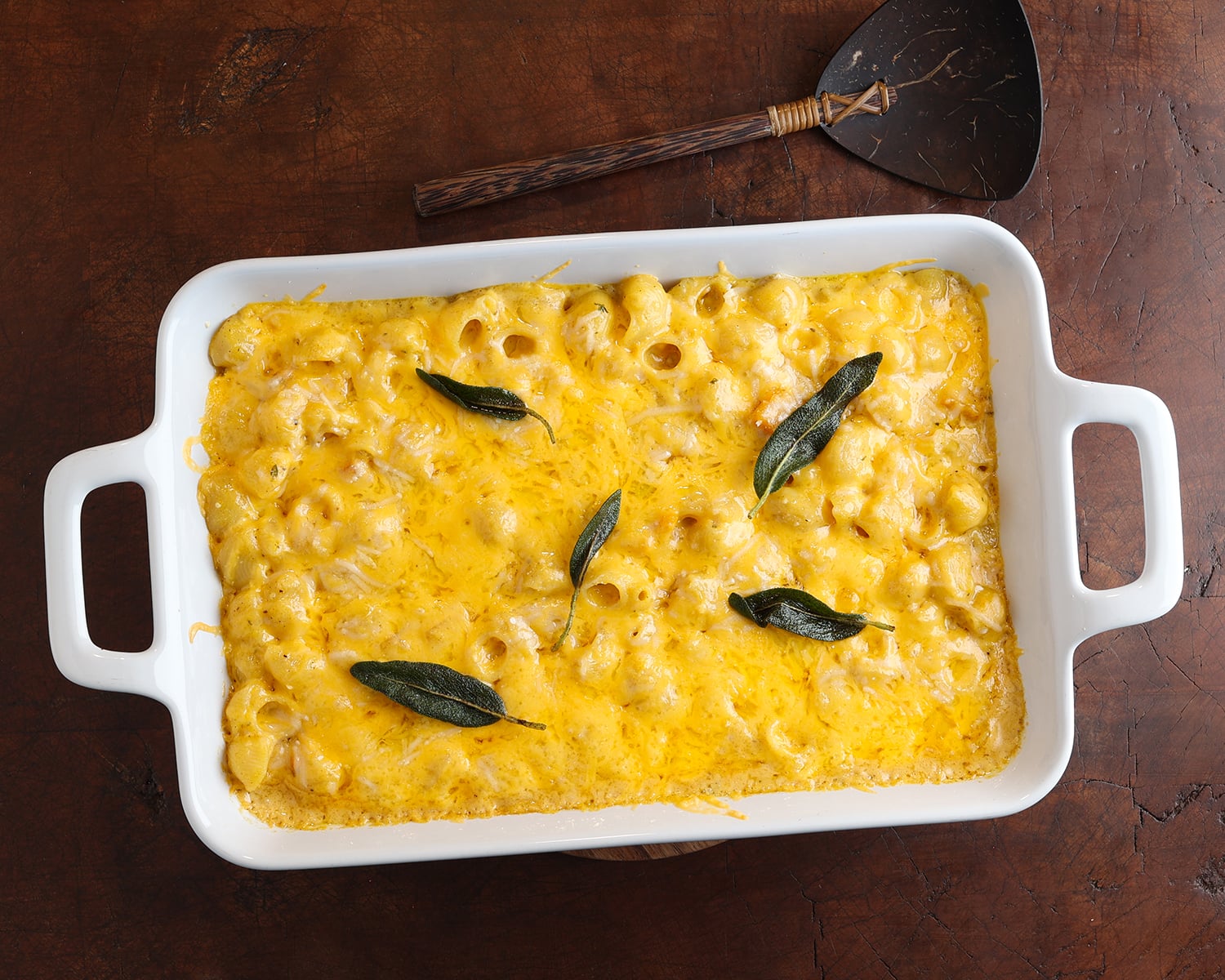
Creamy butternut squash mac and cheese brings sweet roasted squash, nutty brown butter, Gruyère, sharp cheddar, and crispy sage together in one deeply comforting bake. This butternut squash mac and cheese with brown butter and sage is golden, bubbling, and just special enough for a fall dinner or holiday table.
For the past few years, I have kept coming back to butternut squash, looking for new ways to use its natural sweetness and velvety texture. This mac and cheese grew from that curiosity, turning one of fall’s most familiar vegetables into something deeply comforting and a little unexpected.
Jump to Recipe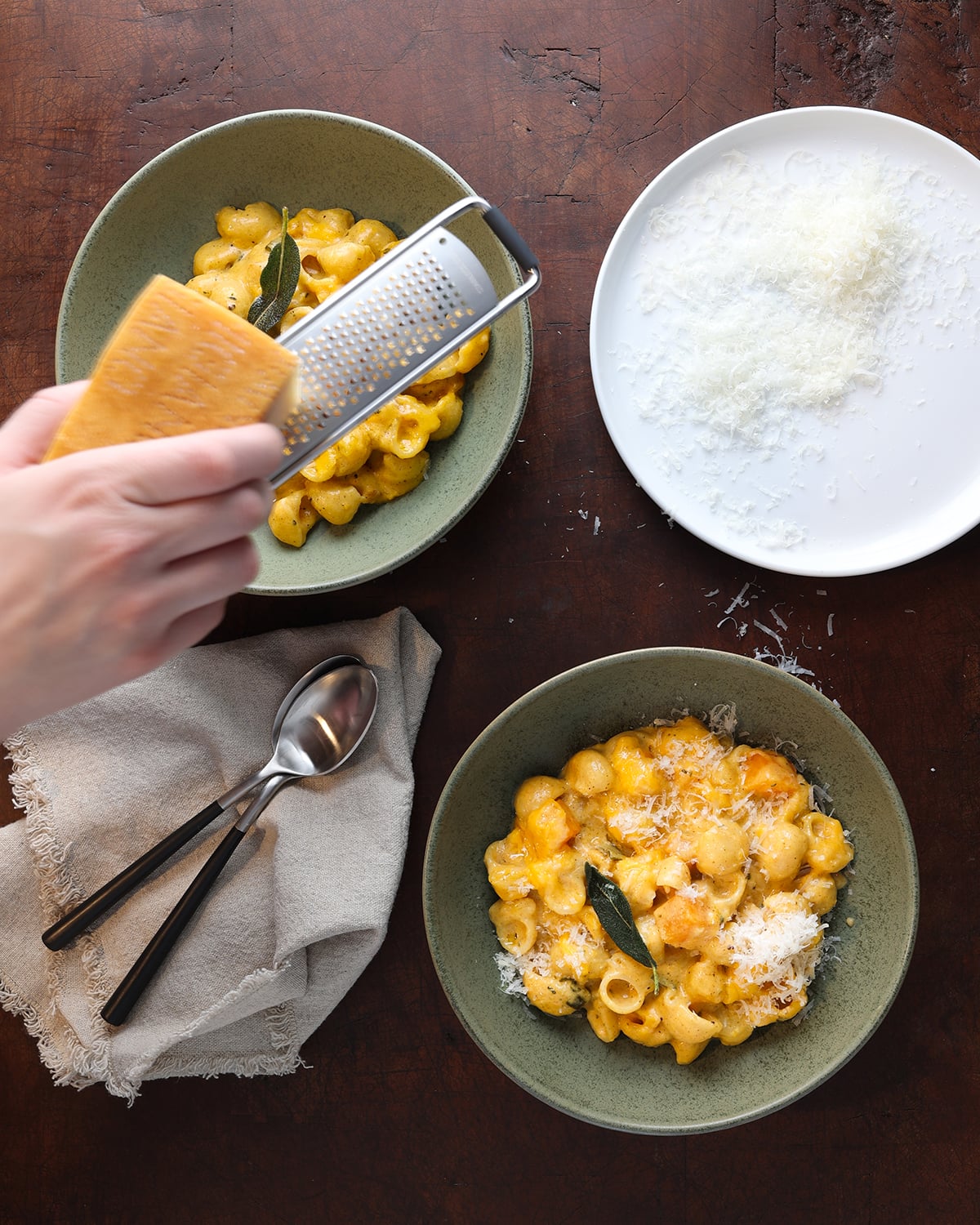
WHY YOU WILL LOVE THIS BUTTERNUT SQUASH MAC AND CHEESE
Roasted butternut squash melts into the cheese sauce, adding natural sweetness, body, and a silky texture without making the dish feel heavy. Brown butter, Gruyère, sharp cheddar, and crispy sage give every bite layered fall flavor while keeping the recipe familiar and deeply comforting.
Jump to:
- WHY YOU WILL LOVE THIS BUTTERNUT SQUASH MAC AND CHEESE
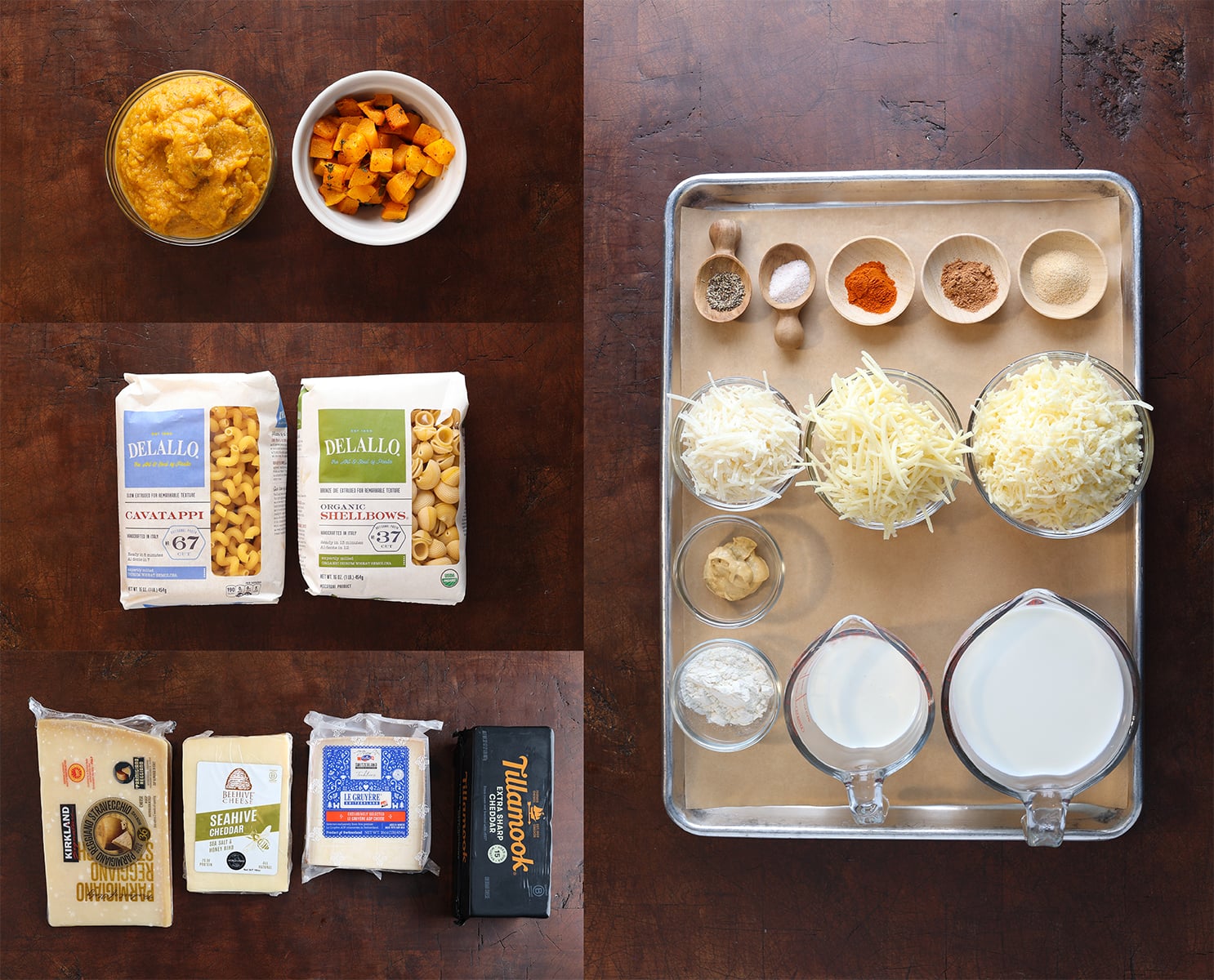
- INGREDIENTS FOR BUTTERNUT SQUASH MAC AND CHEESE
- HOW TO MAKE BUTTERNUT SQUASH MAC AND CHEESE
- EXPERTISE FROM MY KITCHEN, WHY THIS RECIPE WORKS
- WHEN THIS RECIPE SHINES!
- HARVEST FACTS
- KEEP YOUR FALL KITCHEN COOKING WITH ME
- FEATURED FARMER: Gunnell Farm
- EQUIPMENT NEEDED
- BUTTERNUT SQUASH MAC AND CHEESE WITH BROWN BUTTER AND CRISPY SAGE
- DIETARY CONSIDERATIONS
INGREDIENTS FOR BUTTERNUT SQUASH MAC AND CHEESE
Over the past few fall seasons, I've found new ways to let butternut squash earn its place at the table. Here, its sweetness and silky texture become part of the sauce itself, making a familiar comfort food feel distinctly autumnal.
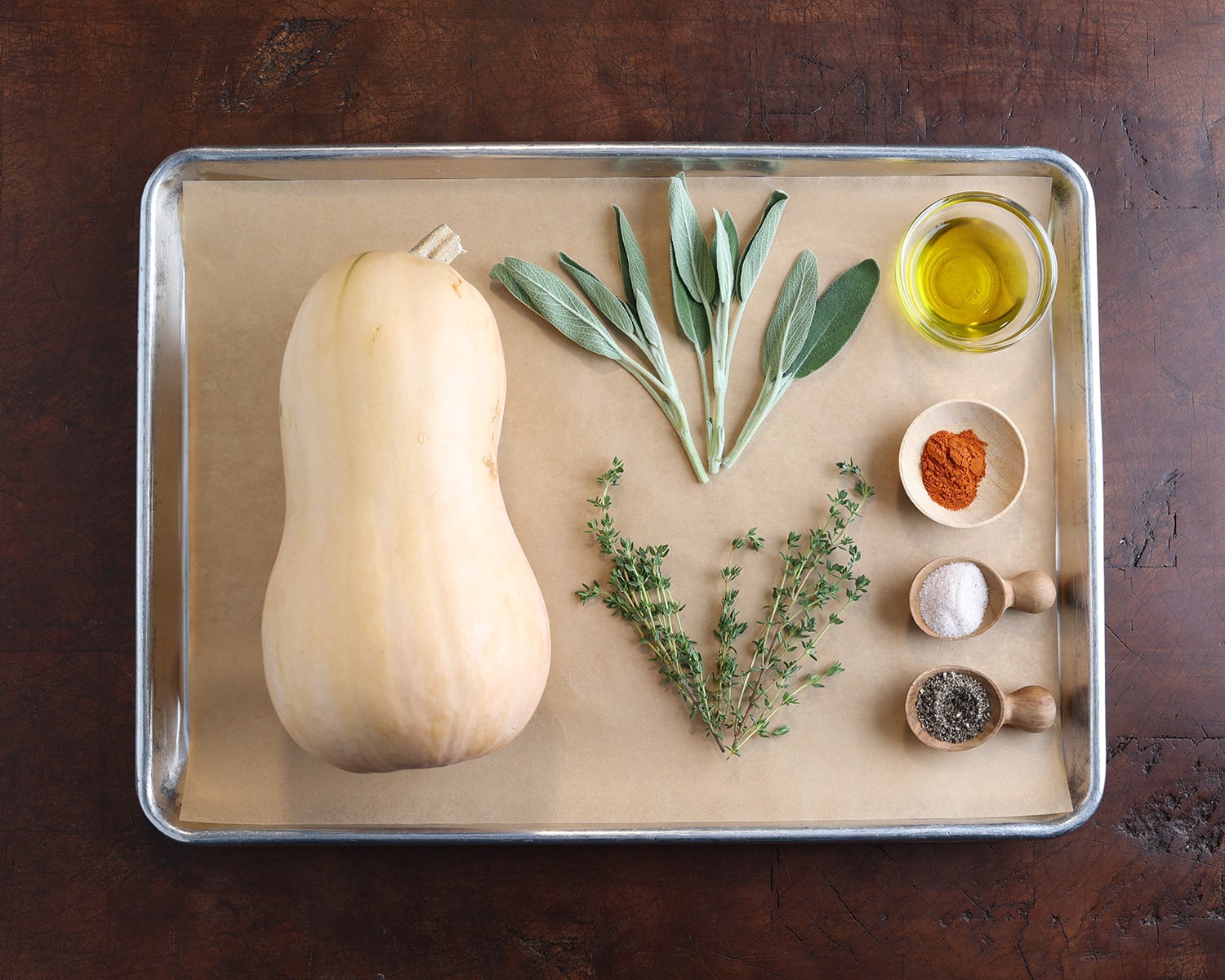
- Butternut squash: Roasting concentrates its natural sweetness and creates caramelized edges. Blended squash gives the cheese sauce body, color, and velvety texture.
- Olive oil: Olive oil helps the squash roast and caramelize evenly. Its mild fruitiness complements the earthy fall flavors.
- Kosher salt: Salt sharpens the sweetness of roasted butternut squash. It also brings the cheese sauce into balance.
- Black pepper: Black pepper adds gentle warmth and savory depth. Freshly cracked pepper is especially aromatic at serving.
- Smoked paprika: Smoked paprika brings subtle smokiness and warm color. It keeps the squash from tasting overly sweet.
- Fresh sage: Sage has an earthy, woodsy flavor made for winter squash. Fried in brown butter, the leaves become wonderfully crisp.
- Fresh thyme: Thyme adds a delicate herbal note while the squash roasts. Its savory character complements sage without overpowering it.
- Pasta: Shells, rigatoni, or cavatappi capture plenty of creamy cheese sauce. Cooking the pasta al dente keeps it firm after baking.
- Butter: Browning butter develops toasted, nutty flavors through the Maillard reaction. It becomes the flavorful foundation for the roux.
- All-purpose flour: Flour combines with butter to form the roux. This thickens the dairy into a smooth, stable cheese sauce.
- Whole milk: Whole milk provides creaminess without making the sauce overly rich. Its proteins and fat help create a cohesive sauce.
- Heavy cream: Heavy cream adds luxurious body and richness. A small amount gives the finished sauce a silkier mouthfeel.
- Dijon mustard: Dijon adds acidity and gentle sharpness to the cheese sauce. It brightens the dairy without tasting distinctly mustardy.
- Garlic powder: Garlic powder distributes savory flavor evenly throughout the sauce. Its mellow character supports rather than dominates the cheese.
- Ground nutmeg: Nutmeg brings subtle warmth to creamy dairy sauces. It is especially complementary to Gruyère and winter squash.
- Sharp white cheddar: Sharp cheddar provides tang, creaminess, and familiar mac-and-cheese flavor. Its boldness balances the sweetness of the squash.
- Gruyère: Gruyère melts smoothly and contributes nutty, savory complexity. Its alpine character pairs beautifully with brown butter and sage.
- Parmigiano-Reggiano: Parmigiano-Reggiano adds concentrated savory flavor and umami. It also helps create a deeply flavorful golden finish.
HOW TO MAKE BUTTERNUT SQUASH MAC AND CHEESE
What I love most about making this recipe is how each step builds on the last. Roasting the squash, browning the butter, and crisping the sage create layers of flavor before the cheese sauce ever comes together.
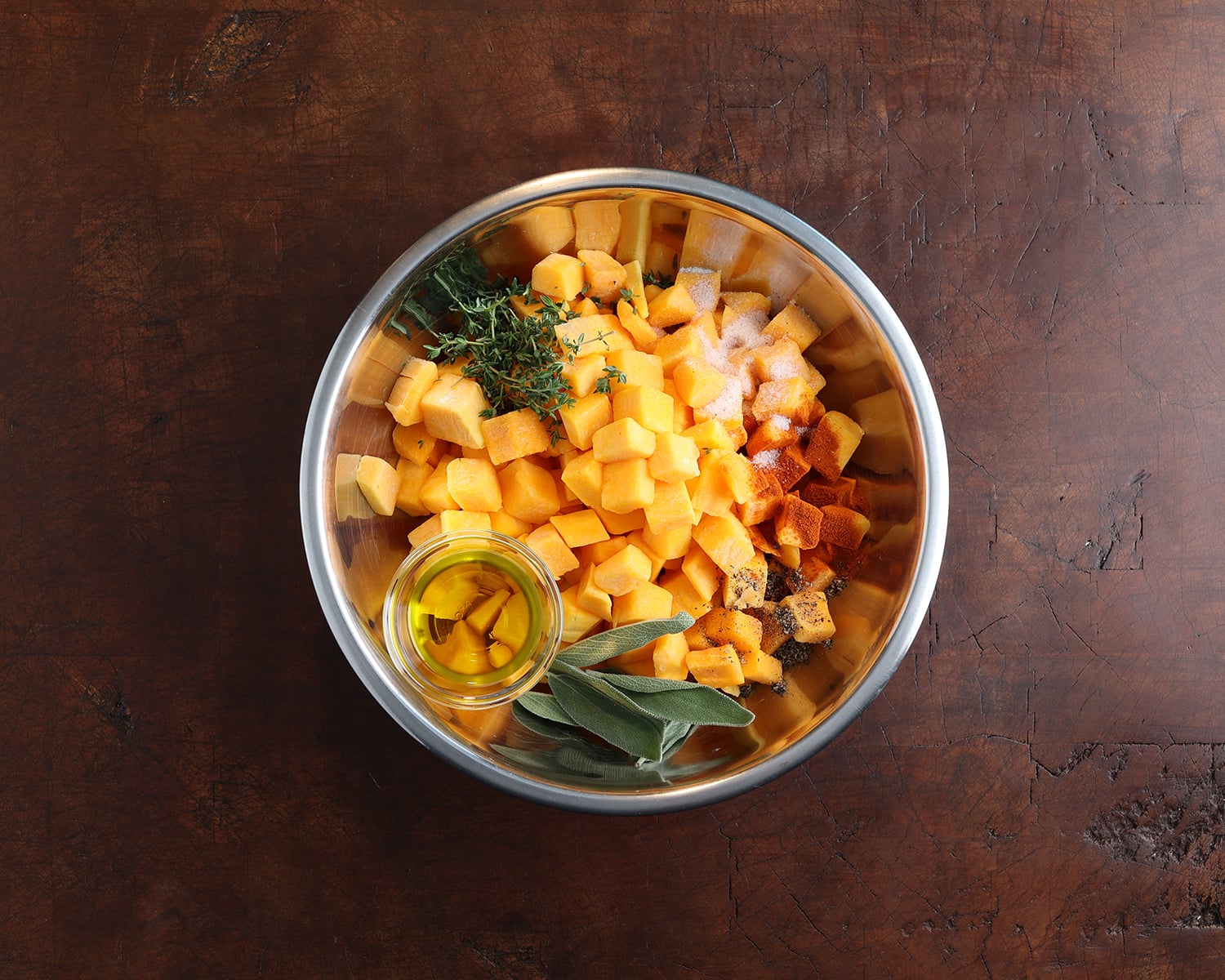
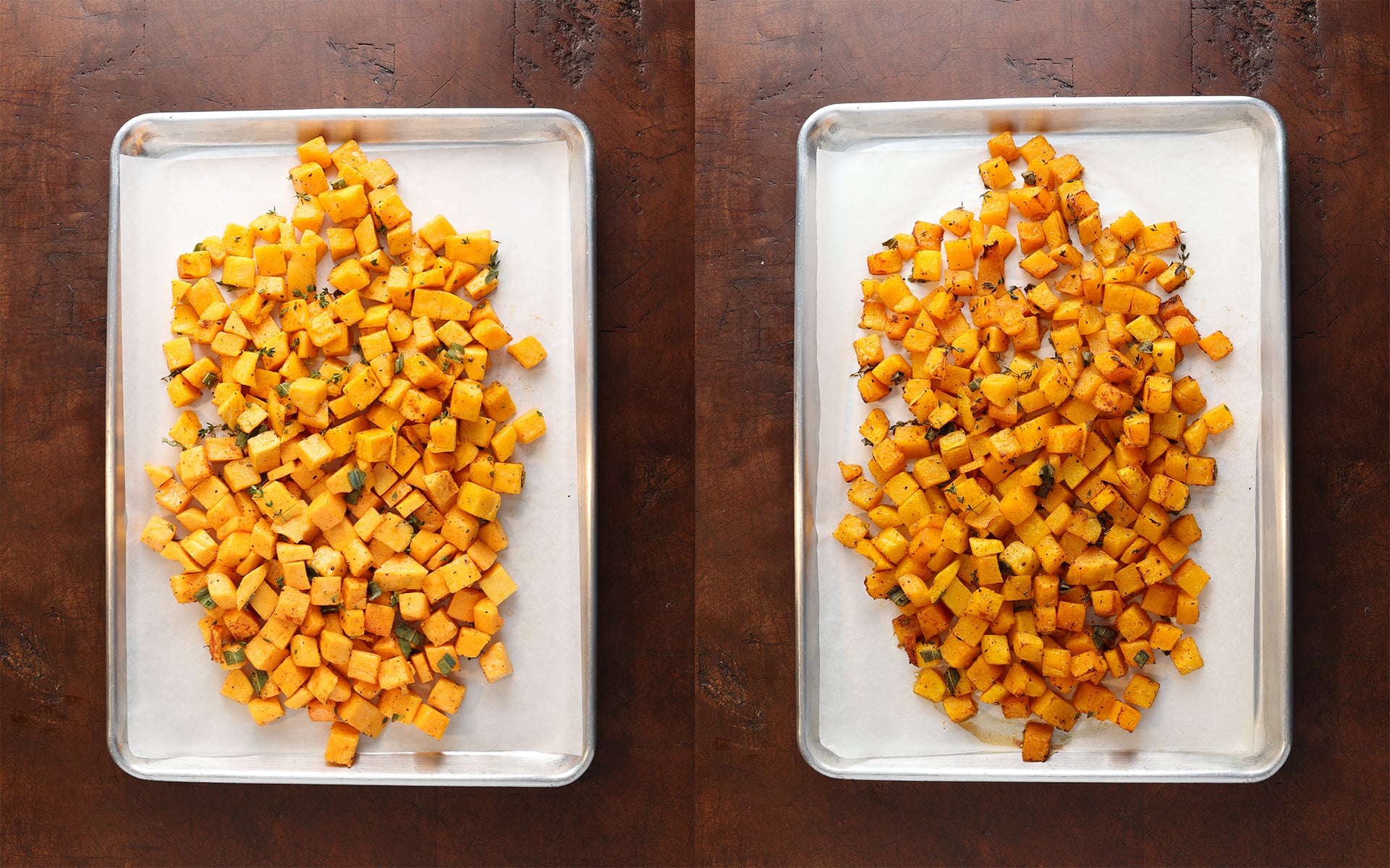
- Roast the squash. Preheat the oven to 400°F (204°C). Toss the butternut squash with olive oil, salt, black pepper, smoked paprika, sage, and thyme. Spread in a single layer on a parchment-lined baking sheet. Roast for 25 to 30 minutes, until tender and caramelized. Reserve about 1 cup of roasted squash for folding into the pasta. Blend or mash the remaining squash until smooth, about 1 cup of puree.
- Cook the pasta. Bring a large pot of salted water to a boil. Cook the pasta according to package directions until al dente. Drain and set aside.
- Brown the butter and crisp the sage. Melt the butter in a large pot or deep skillet over medium heat. Add the sage leaves and cook for 2 to 3 minutes, swirling occasionally, until the butter is golden brown and smells nutty. Remove the crispy sage leaves and reserve them for garnish.
- Make the roux. Whisk the flour into the brown butter. Cook for 1 to 2 minutes, whisking constantly, until bubbly and lightly golden.
- Build the sauce. Slowly whisk in the whole milk and heavy cream. Continue whisking for 3 to 4 minutes, until smooth and slightly thickened.
- Add the squash and seasonings. Stir in the butternut squash puree, Dijon mustard, garlic powder, smoked paprika, nutmeg, salt, and black pepper. Stir until smooth and creamy.
- Melt in the cheese. Reduce the heat to low. Add the sharp white cheddar, Gruyère, and Parmigiano-Reggiano. Stir gently until the cheese is melted and the sauce is smooth and velvety. Taste and adjust the seasoning as needed.
- Combine. Add the cooked pasta and toss until evenly coated. Gently fold in the reserved roasted butternut squash cubes.
- Transfer to the baking dish. Reduce the oven temperature to 375°F (190°C). Lightly butter a 9 x 13-inch baking dish. Spoon in the mac and cheese and spread evenly.
- Add the topping. Sprinkle the sharp cheddar and Parmigiano-Reggiano evenly over the top.
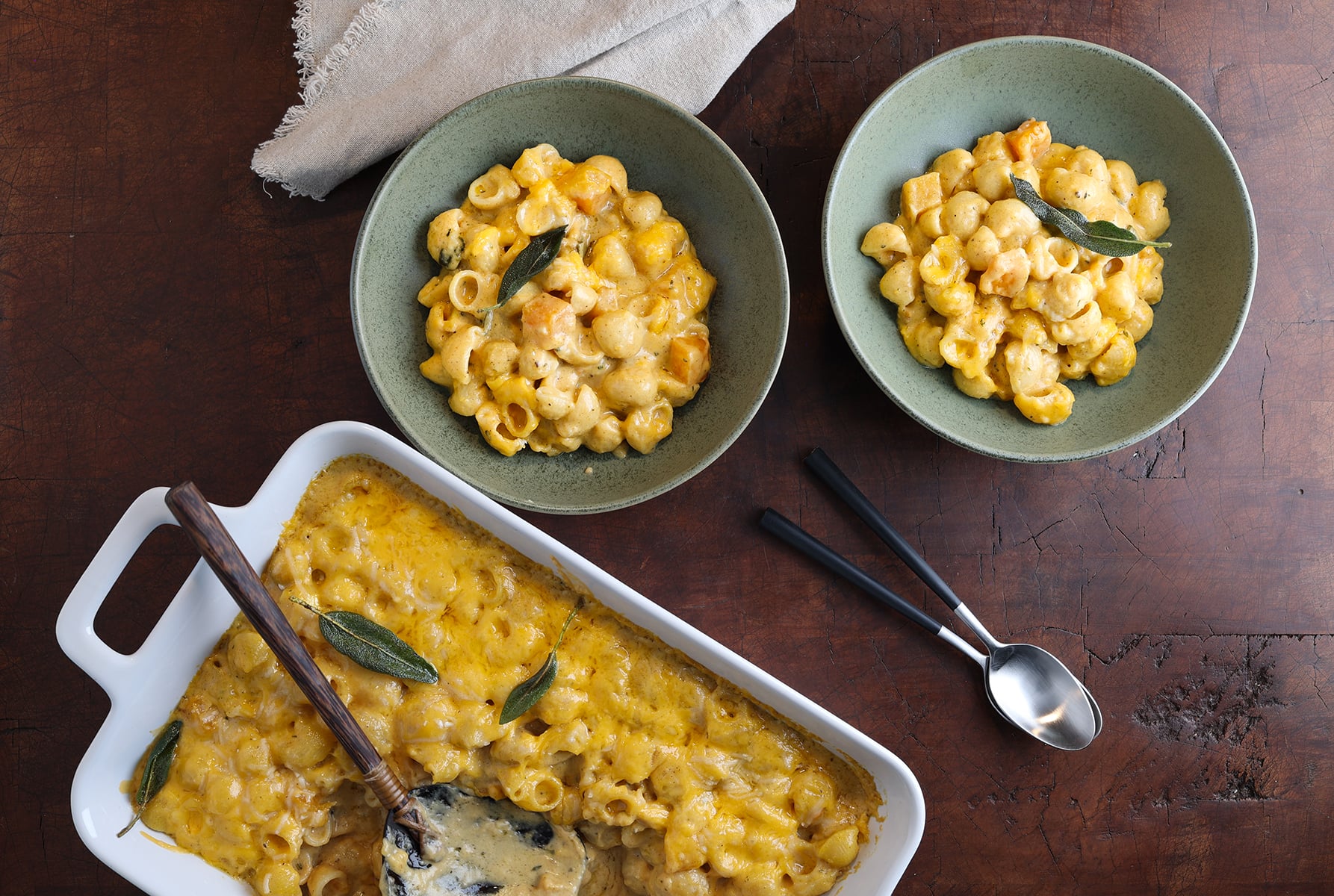
- Bake until bubbly. Cover with foil and bake for 10 minutes. Remove the foil and bake for another 10 to 15 minutes, until the cheese is melted, the edges are bubbling, and the top is lightly golden.
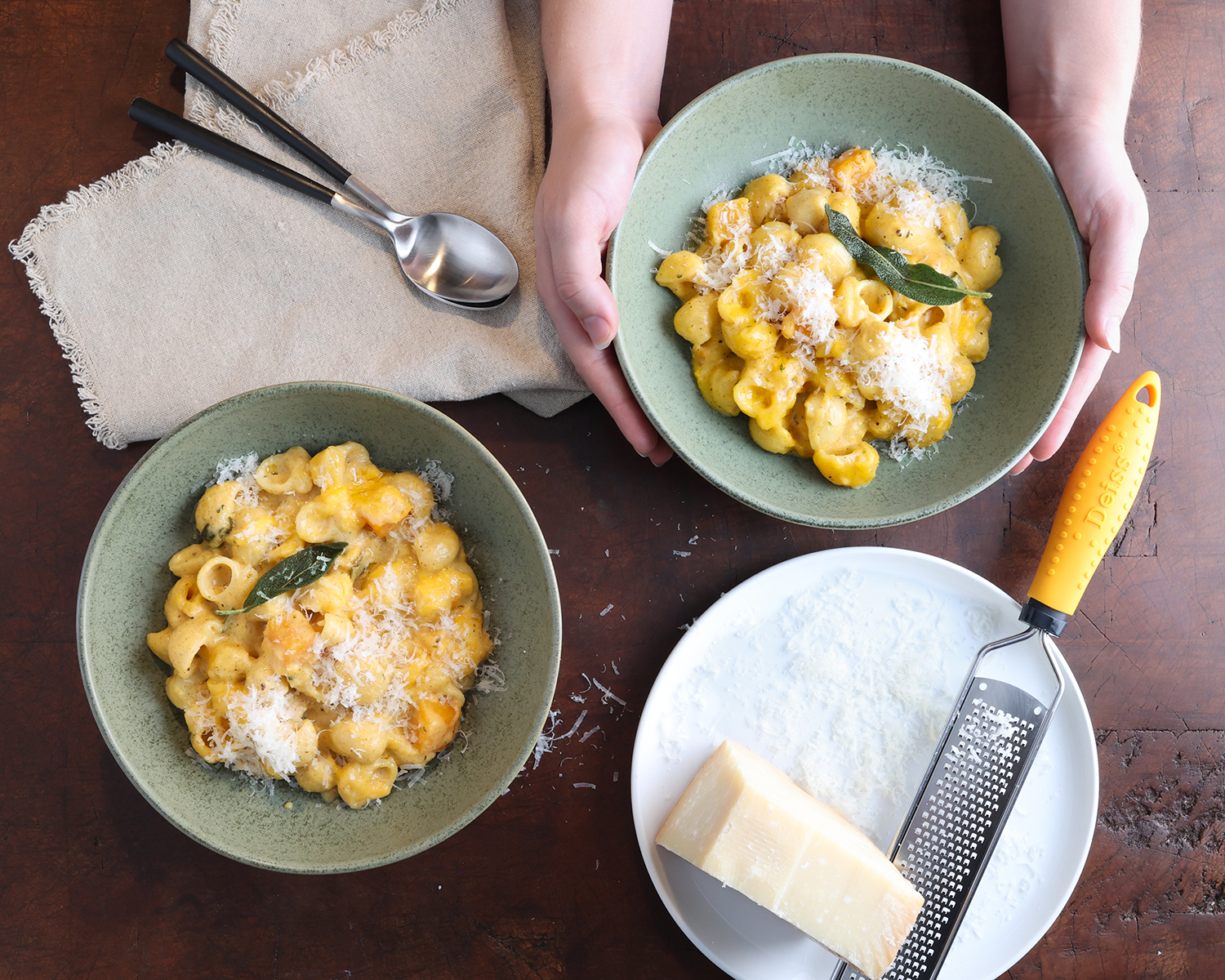
- Finish and serve. Let rest for 5 to 10 minutes. Garnish with the crispy sage leaves and freshly cracked black pepper before serving.
EXPERTISE FROM MY KITCHEN, WHY THIS RECIPE WORKS
As a professional recipe developer, bakery owner, and someone trained deeply in dairy science, I pay close attention to how fat, starch, moisture, and heat work together. This butternut squash mac and cheese succeeds because each step is doing more than adding flavor, it is also building texture, stability, and balance.
Roast the Squash Before Blending
Roasting drives off excess moisture while concentrating the squash’s natural sugars. That gives the puree deeper flavor and helps keep the finished sauce creamy instead of watery.
Brown the Butter Before Building the Roux
As butter browns, its milk solids toast and develop nutty, caramel-like flavor. Whisking flour into that browned butter creates a roux that thickens the milk and cream while carrying those toasted flavors through the entire sauce. Learn how to brown butter and store extra for ready use.
Add the Cheese Over Low Heat
Cheese melts best when the sauce is hot, but not aggressively boiling. Lower heat helps the cheddar, Gruyère, and Parmigiano-Reggiano melt smoothly, reducing the risk of a grainy or oily sauce.

WHEN THIS RECIPE SHINES!
This recipe is most at home when butternut squash is abundant and cool-weather cooking starts to feel especially welcome. It works beautifully from early fall through winter, when roasted squash, brown butter, sage, and bubbling cheese fit naturally into weeknight dinners, holiday tables, and slower weekend meals.
Season: Fall, Winter
Months: September through February
Fun Fact
Butternut squash often tastes sweeter after curing. A short post-harvest curing period helps convert some of its starches into sugars while also toughening the skin for better storage. “Curing” means letting freshly harvested butternut squash sit in a warm, dry, well-ventilated place for a short period before long-term storage.
HARVEST FACTS
Butternut squash is a classic cool-weather crop, harvested from late summer into fall and enjoyed well into winter because it stores exceptionally well. Its long keeping quality is one reason it appears so naturally in autumn and holiday cooking.
When Is Butternut Squash in Season?
Fresh butternut squash is typically harvested from September through November, with peak abundance in early to mid-fall. Thanks to its thick skin and firm flesh, properly cured squash can remain excellent for months after harvest.
Why Does Butternut Squash Store So Well?
After harvest, butternut squash is often cured in a warm, dry place. This helps harden the skin, seal minor surface damage, and improve storage life.
Does Butternut Squash Get Sweeter After Harvest?
It can. During curing and storage, some of the squash’s starches convert into sugars, which can deepen its natural sweetness and round out its flavor.
How to Choose a Good Butternut Squash
Look for squash that feels heavy for its size with firm, matte skin and no soft spots. A hard stem and deep beige color are also good signs of maturity.
KEEP YOUR FALL KITCHEN COOKING WITH ME
If this butternut squash mac and cheese has you leaning into fall cooking, there is plenty more harvest waiting in the kitchen. Make a pot of Roasted Poblano Pumpkin Soup when you want something smoky and warming, or brighten the table with my Dodo Dinner Salad alongside a cozy autumn meal. Pumpkin Red Lentil Soup turns pumpkin into a hearty weeknight supper, while Harvest Banana Pumpkin Bread with Maple Glaze is made for slower mornings and afternoon slices. And when the season calls for dessert, Pumpkin Cheesecake with Brown Butter Graham Crust and Cinnamon Whipped Cream carries that same warm brown-butter flavor into something worth lingering over.
Keep following what is growing, cooking what tastes good now, and discovering one more way to celebrate the fall harvest with me.

FEATURED FARMER: Gunnell Farm
At Gunnell Farm in Smithfield, Utah, fall is not represented by just one familiar squash. The farm grows a remarkably varied collection of culinary winter squash, including Delicata, Acorn, Kabocha, Banana Squash, and several butternut varieties such as Butterbaby, Honeynut, Betternut, and Butterkin.
What makes Gunnell Farm especially memorable is its curiosity about what belongs on the dinner table. As interest in cooking with winter squash has grown, the farm has expanded its selection, giving home cooks the chance to discover varieties beyond the standard supermarket butternut.
The next time you cut into a butternut squash, remember that there are farmers making thoughtful choices long before it reaches your kitchen, choosing varieties, tending the soil, and giving us more ways to taste the season.
Explore Gunnell Farm’s wide variety of winter squash.
EQUIPMENT NEEDED
Use what you have and own, this is simply what I use because I have these in my kitchen.
- Large, rimmed baking sheet
- Parchment paper
- Chef’s knife
- Cutting board
- Vegetable peeler
- Large pot for cooking pasta
- Large deep skillet such as a Rondeau for the cheese sauce – *You can also bake directly in this pan rather than transferring to a casserole dish
- Whisk
- Wooden spoon or silicone spatula
- Colander
- Measuring cups and spoons
- Kitchen Scale – You know me! I prefer weighing over cups and spoons.
- Box grater or rotary cheese grater
- Blender, food processor, or potato masher for the butternut squash puree. – *You can also use the food processor to grater the cheese quickly!
- 9 x 13-inch baking dish
- Aluminum foil
- Oven mitts or heat-safe gloves

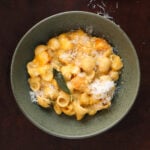
BUTTERNUT SQUASH MAC AND CHEESE WITH BROWN BUTTER AND CRISPY SAGE
Ingredients
Roasted Butternut Squash
- 1 small butternut squash (907 g) 2 lb, peeled and cubed
- 1 tablespoon olive oil (15 ml)
- 1 teaspoon kosher salt (3 g)
- ½ teaspoon black pepper (1 g)
- ½ teaspoon smoked paprika (1 g)
- 3 to 4 fresh sage sprigs (3 to 4 g) roughly chopped
- 2 to 3 fresh thyme sprigs (1 to 2 g) leaves removed from stems
Mac and Cheese
- 12 oz pasta (340 g) such as lumachel “shellbows” cavatappi, or rigatoni
- 4 tablespoons butter (57 g)
- 8 to 10 fresh sage leaves (2 to 3 g)
- 2 tablespoons all-purpose flour (16 g)
- 2 cups whole milk (480 ml)
- ½ cup heavy cream (120 ml)
- 1 tablespoon Dijon mustard (15 g)
- 1 teaspoon garlic powder (3 g)
- ½ teaspoon smoked paprika (1 g)
- ½ teaspoon ground nutmeg (1 g)
- Kosher salt and black pepper to taste
- 1 ½ cups sharp white cheddar (170 g) freshly grated
- 1 cup Gruyère (115 g) freshly grated
- ¼ cup Parmigiano-Reggiano (25 g) freshly grated
- ½ cup sharp cheddar (57 g) for topping
Instructions
- Roast the squash. Preheat the oven to 400°F (204°C). Toss the butternut squash with olive oil, salt, black pepper, smoked paprika, sage, and thyme.1 small butternut squash, 1 tablespoon olive oil, 1 teaspoon kosher salt, ½ teaspoon black pepper, ½ teaspoon smoked paprika, 3 to 4 fresh sage sprigs, 2 to 3 fresh thyme sprigs
- Spread in a single layer on a parchment-lined baking sheet. Roast for 25 to 30 minutes, until tender and caramelized.
- Reserve about 1 cup of roasted squash for folding into the pasta. Blend or mash the remaining squash until smooth, about 1 cup of puree.
- Cook the pasta. Bring a large pot of salted water to a boil. Cook the pasta according to package directions until al dente, or 1 minute less than al dente. Drain and set aside.12 oz pasta
- Brown the butter and crisp the sage. Melt the butter in a large pot or rondeau style deep skillet over medium heat. Add the sage leaves and cook for 2 to 3 minutes, swirling occasionally, until the butter is golden brown and smells nutty. Remove the crispy sage leaves and reserve them for garnish.4 tablespoons butter, 8 to 10 fresh sage leaves
- Make the roux. Whisk the flour into the brown butter. Cook for 1 to 2 minutes, whisking constantly, until bubbly and lightly golden.2 tablespoons all-purpose flour
- Build the sauce. Slowly whisk in the whole milk and heavy cream. Continue whisking for 3 to 4 minutes, until smooth and slightly thickened.2 cups whole milk, ½ cup heavy cream
- Add the squash and seasonings. Stir in the butternut squash puree, Dijon mustard, garlic powder, smoked paprika, nutmeg, salt, and black pepper. Stir until smooth and creamy.1 tablespoon Dijon mustard, 1 teaspoon garlic powder, ½ teaspoon smoked paprika, ½ teaspoon ground nutmeg, Kosher salt and black pepper
- Melt in the cheese. Reduce the heat to low. Add the sharp white cheddar, Gruyère, and Parmigiano-Reggiano. Stir gently until the cheese is melted and the sauce is smooth and velvety. Taste and adjust the seasoning as needed.1 ½ cups sharp white cheddar, 1 cup Gruyère, ¼ cup Parmigiano-Reggiano
- Combine. Add the cooked pasta and toss until evenly coated. Gently fold in the reserved roasted butternut squash cubes.
- Transfer to the baking dish. Reduce the oven temperature to 375°F (190°C). Lightly butter a 9 x 13-inch baking dish. Spoon in the mac and cheese and spread evenly.
- Add the topping. Sprinkle the sharp cheddar and Parmigiano-Reggiano evenly over the top.½ cup sharp cheddar
- Bake until bubbly. Cover with foil and bake for 10 minutes. Remove the foil and bake for another 10 to 15 minutes, until the cheese is melted, the edges are bubbling, and the top is lightly golden.
- Finish and serve. Let rest for 5 minutes. Garnish with the crispy sage leaves and freshly cracked black pepper before serving.
Notes

Nutrition
DIETARY CONSIDERATIONS
The dietary categories below are provided as a quick reference to help you determine whether this recipe may fit your dietary preferences. They are intended as a helpful guide, not as medical or nutritional advice. Individual ingredients and brands can vary, so always check product labels if you have food allergies, sensitivities, or specific dietary needs.
- DF (Dairy Free): No. This recipe contains butter, milk, cream, cheddar, Gruyère, and Parmigiano-Reggiano.
- EF (Egg Free): YES This recipe contains no eggs.
- GF (Gluten-free): No. Traditional pasta and all-purpose flour contain gluten.
- NF (Nut Free): YES This recipe contains no nuts.
- PB (Plant Based): No. This recipe contains several dairy ingredients.
- SF (Sugar Free): YES No added sugar is used in this recipe.
- VE (Vegetarian): YES This recipe contains no meat, poultry, or seafood.
- VG (Vegan): No. This recipe contains butter, milk, cream, and cheese.
- Paleo: No. Pasta, flour, and dairy are not Paleo compliant.
- Keto: No. Pasta and butternut squash make this too high in carbohydrates for a typical keto diet.
- Whole30: No. Pasta, flour, butter, cream, and cheese are not Whole30 compliant.


Leave a Reply