
This Carbonara with English Peas & Watercress is a fresh, seasonal twist on the Italian classic, made with silky egg yolks, savory prosciutto, sweet English peas, peppery watercress, and Parmigiano-Reggiano. Ready in just 30 minutes, this elegant pasta recipe celebrates the harvest while delivering restaurant-quality flavor with simple, wholesome ingredients.
Jump to Recipe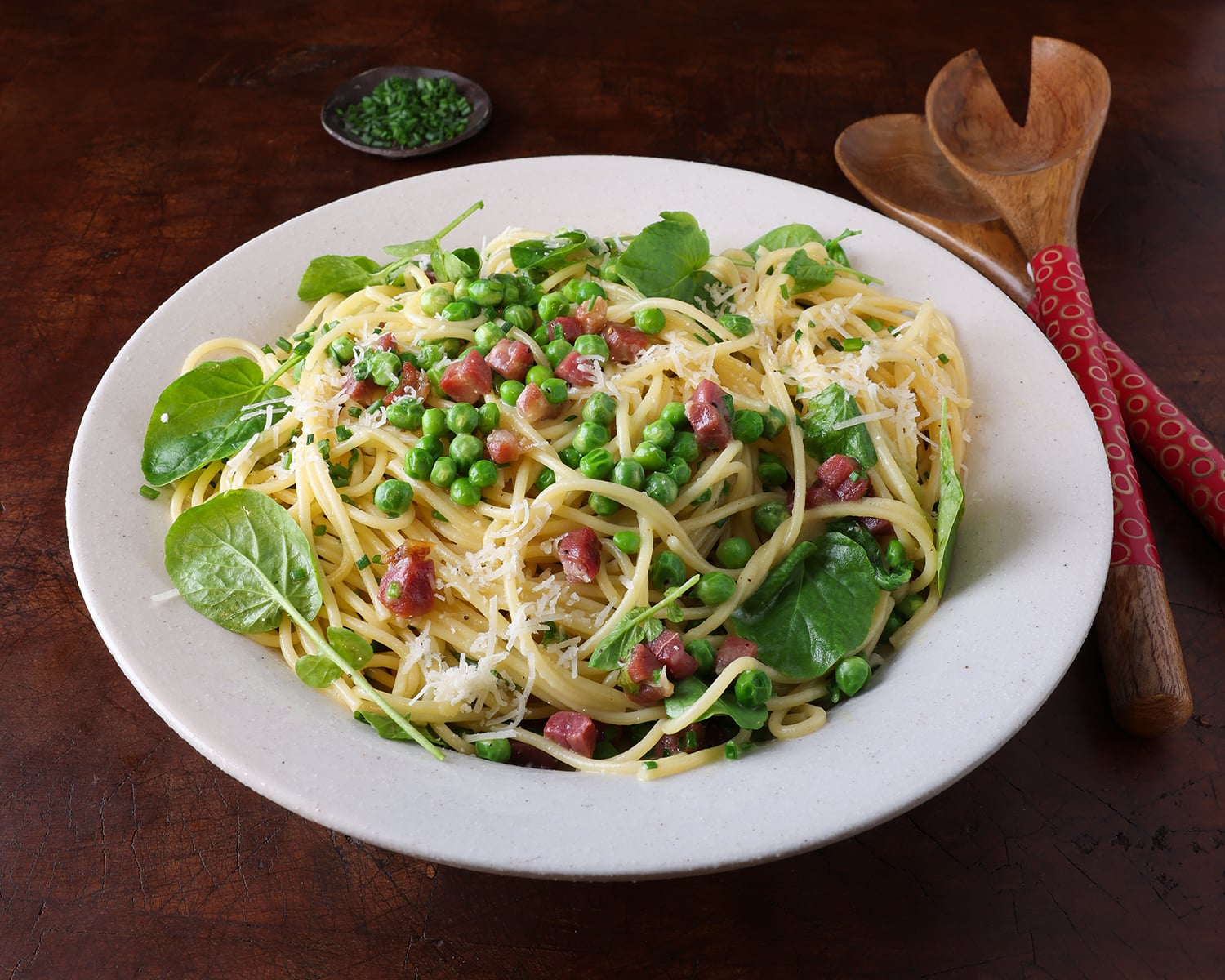
Why You'll Love This Carbonara with English Peas & Watercress
This easy carbonara recipe proves that a handful of seasonal ingredients can transform a timeless favorite into something truly memorable. Sweet English peas and fresh watercress brighten the rich, creamy sauce, creating a balanced pasta dish that's perfect for weeknight dinners, special occasions, or celebrating the best of the season.
Jump to:
- Why You'll Love This Carbonara with English Peas & Watercress
- Ingredients for Carbonara with English Peas & Watercress
- How to Make Carbonara with English Peas & Watercress
- Expertise From My Kitchen, Why This Carbonara with English Peas & Watercress Works
- When This Recipe Shines
- Harvest Facts
- MORE RECIPES TO EXPLORE
- FEATURED FARMER: Hedlin’s Family Farm
- Equipment Needed
- Carbonara with English Peas & Watercress
- DIETARY CONSIDERATIONS
- More Pasta
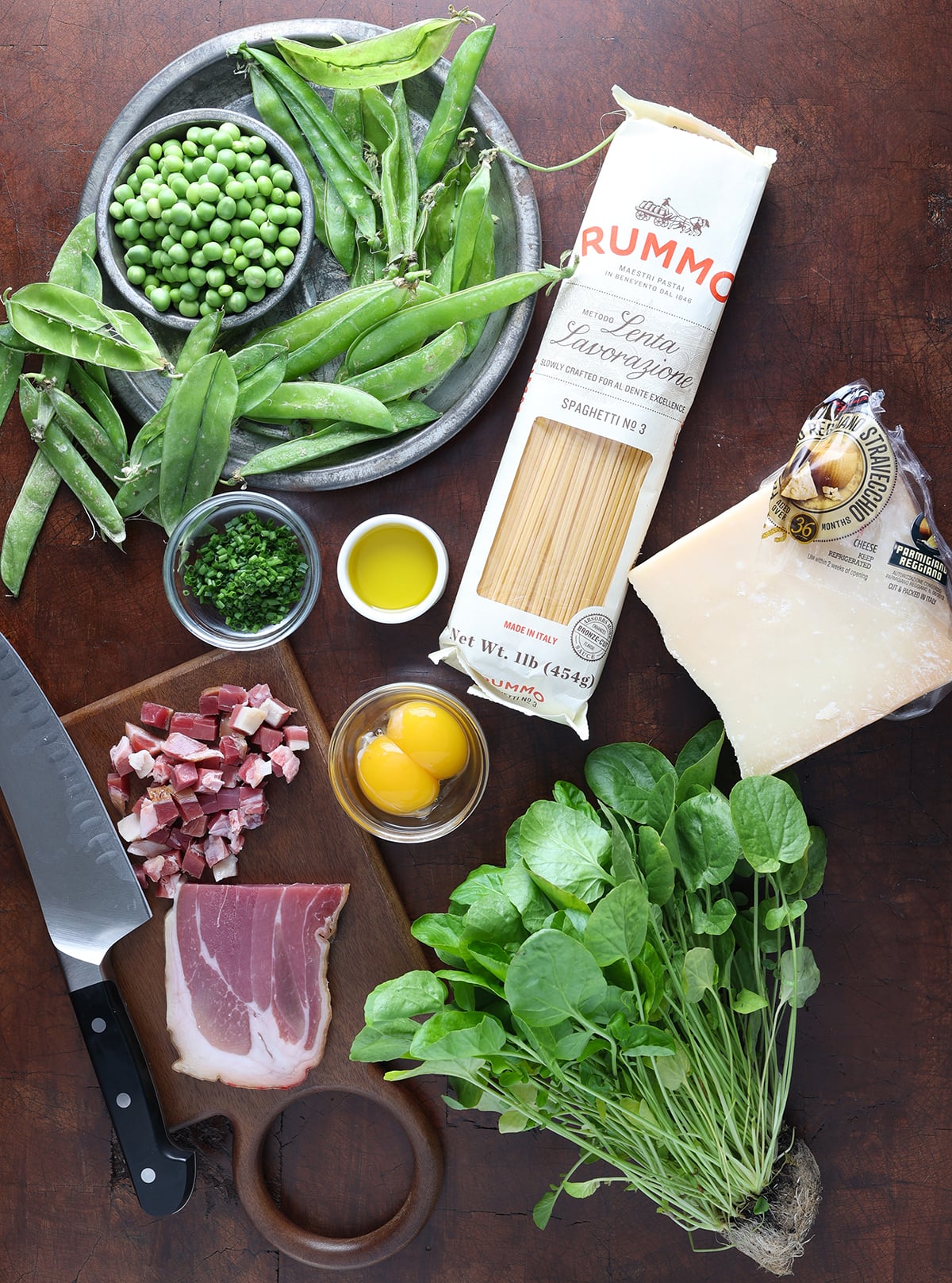
Ingredients for Carbonara with English Peas & Watercress
One of my favorite things about this recipe is how every ingredient has a purpose. Nothing is here just for decoration; each one contributes flavor, texture, or balance, proving that a simple ingredient list can create an unforgettable meal.
- Prosciutto: Delicate, savory, and lightly crisped, prosciutto adds salty depth without overpowering the fresh vegetables. Its lean texture makes this version of carbonara feel a little lighter while still delivering rich, cured flavor.
- Extra-Virgin Olive Oil: A small amount of olive oil helps gently crisp the prosciutto and provides the flavorful base for the sauce. Choose a good-quality olive oil with a mild, fruity flavor.
- Thin Spaghetti, Linguine, or Fettuccine: Long strands of pasta capture the silky egg and cheese sauce beautifully. Cooking the pasta just shy of al dente ensures the perfect texture after everything is tossed together.
- English Peas: Sweet, tender English peas add bright pops of freshness that balance the richness of the carbonara. They are also an excellent source of fiber, vitamin C, and plant-based protein.
- Fresh Chives: Chives contribute a delicate onion flavor without overwhelming the dish. Their vibrant green color also adds freshness to every bite.
- Egg Yolks: Egg yolks create carbonara's signature silky sauce without the need for cream. They also provide richness, body, and natural emulsifying power that binds the sauce together.
- Parmigiano-Reggiano: This aged Italian cheese melts into the warm pasta, creating a nutty, savory sauce with exceptional depth of flavor. Naturally rich in calcium and protein, it is one of the defining ingredients of a great carbonara.
- Watercress: Folded in just before serving, watercress adds a fresh, peppery finish that brightens the entire dish. As a member of the brassica family, it is naturally rich in vitamins A, C, and K, making it one of the most nutrient-dense leafy greens available. Milder than arugula yet bolder than spinach, it strikes a wonderful balance of fresh, peppery flavor.
- Kosher Salt: Properly salting the pasta water seasons the noodles from the inside out, creating a more flavorful finished dish. Carbonara relies on this simple step since very little additional salt is added later.
- Freshly Ground Black Pepper: Black pepper is one of carbonara's signature flavors, adding warmth and subtle spice that complements the rich eggs, cheese, and prosciutto. Freshly cracked pepper provides a much brighter, more aromatic flavor than pre-ground pepper.
How to Make Carbonara with English Peas & Watercress
One of the things I love most about carbonara is that it feels elegant without being complicated. Once you understand a few simple techniques, you'll have a silky, restaurant-worthy pasta that's easy enough to make any night of the week.
- Bring the Water to a Boil: Fill a large pot with water and bring it to a rolling boil. Season generously with kosher salt until the water tastes pleasantly salty, like the sea. This is your only opportunity to season the pasta itself.
- Crisp the Prosciutto: Place the ¼-inch (6 mm) cubes of prosciutto in a large skillet over medium heat with the olive oil. Cook for 3 to 5 minutes, stirring occasionally, until the edges begin to lightly crisp and the prosciutto is warmed through. Stir in several generous grinds of freshly cracked black pepper, then reduce the heat to low. Leave the prosciutto and olive oil in the skillet, they'll become the flavorful base for the sauce.
- Cook the Pasta: Add the pasta to the boiling water and cook until just shy of al dente, about 1 minute less than the package directions. Before draining, reserve 1 cup (240 ml) of the starchy pasta water.
- Blanch the Peas: During the final 1 to 2 minutes of cooking, add the shelled English peas directly to the pasta water. They need only a quick blanch to become bright green and tender while maintaining their fresh sweetness.
- Build the Sauce: Remove the skillet from the heat. In a small bowl, whisk the egg yolks until smooth. Slowly whisk in 2 to 3 tablespoons of the reserved pasta water, 1 tablespoon at a time, to gently warm the yolks. This process, called tempering, helps prevent the eggs from scrambling when they meet the warm pasta.
- Combine Everything: Add the drained pasta and peas to the skillet with the prosciutto. Pour in the tempered egg yolks along with the grated Parmigiano-Reggiano. Toss continuously with tongs, adding a few splashes of the reserved pasta water as needed until the cheese melts and the eggs form a silky sauce that coats every strand of pasta.
- Finish with Freshness: Fold in the chopped chives and watercress just before serving. The residual heat will gently wilt the watercress while preserving its bright color and peppery bite. Taste and season with additional black pepper or salt, if needed.
- Serve Immediately: Carbonara is at its absolute best the moment it's finished. Serve immediately with extra Parmigiano-Reggiano and another generous grind of black pepper.
Expertise From My Kitchen, Why This Carbonara with English Peas & Watercress Works
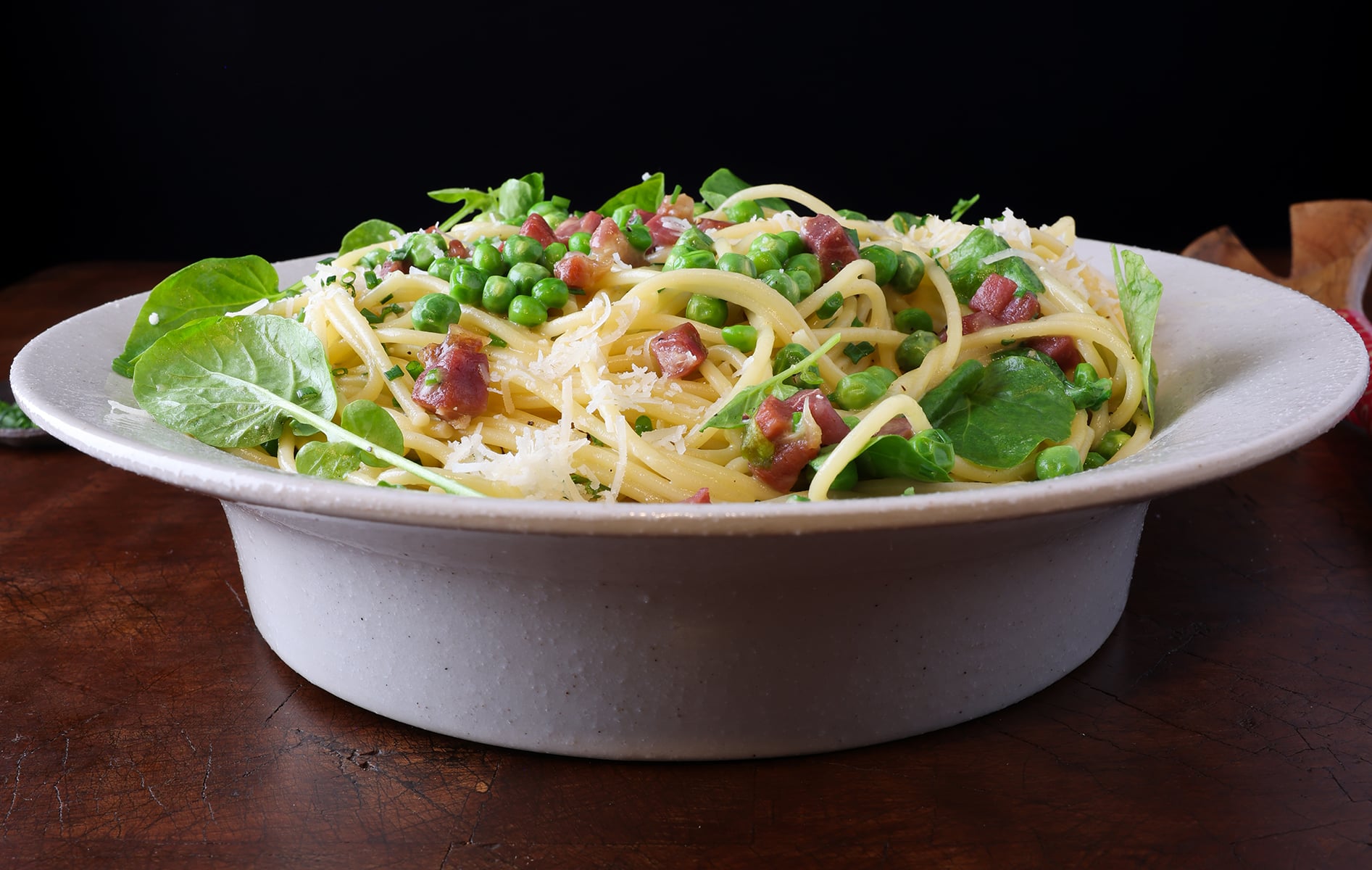
As a professional recipe developer, bakery owner, and graduate of gelato school in Bologna, Italy, I've spent years studying how ingredients behave and why small technique changes can completely transform a recipe. Carbonara is a wonderful example of culinary science in action. Instead of relying on cream, this version builds its silky sauce from egg yolks, aged cheese, and starchy pasta water. I also chose Prosciutto di Parma over the more traditional guanciale or pancetta to create a lighter texture that allows the sweet English peas and peppery watercress to shine. Understanding these simple techniques will help you create a smooth, flavorful carbonara every time.
Why Tempering the Egg Yolks Matters
Carbonara's signature creamy sauce comes from gently cooked egg yolks, not cream. Whisking a few tablespoons of warm pasta water into the yolks before adding them to the pasta gradually raises their temperature, preventing them from scrambling while creating a silky, emulsified sauce.
Why I Chose Prosciutto Instead of Pancetta
Traditional carbonara is made with guanciale, while pancetta is a common substitute because both render generous amounts of flavorful fat. For this recipe, I intentionally chose Prosciutto di Parma. Its leaner texture and delicate flavor create a lighter carbonara that complements the sweetness of fresh English peas and the peppery bite of watercress, while the egg yolks, Parmigiano-Reggiano, and pasta water still provide all the richness the sauce needs.
Why Reserved Pasta Water Is Essential
The cloudy pasta water is rich in starch released from the noodles as they cook. When tossed with the egg yolks, cheese, and olive oil, that starch helps emulsify the sauce into a glossy coating that clings beautifully to every strand of pasta. Adding the water a splash at a time also gives you complete control over the final consistency.

When This Recipe Shines
This carbonara is at its very best when fresh English peas are sweet and plentiful. While you can certainly make it year-round using frozen peas, the bright flavor and tender texture of freshly shelled peas paired with peppery watercress make this pasta especially memorable during the height of summer harvest.
Season: Summer
Months: June, July, August
Harvest Facts
English Peas:
English peas are one of the sweetest vegetables of the summer harvest. Their natural sugars begin converting to starch soon after picking, so the fresher the peas, the sweeter and more tender they'll taste. If you're buying them in the pod, shell them as close to cooking time as possible for the very best flavor.
Watercress:
Watercress thrives in cool, flowing water and reaches its peak during spring and early summer. As temperatures rise, its peppery flavor becomes more pronounced, making it an ideal partner for rich dishes like carbonara where its fresh bite balances the creamy sauce.
Chives:
Chives begin producing in spring and continue well into summer with regular harvesting. Their mild onion flavor is most delicate when the stems are young and tender, adding freshness without overpowering more subtle ingredients.
Harvest Pairing
What Grows Together, Goes Together: Natureis a wonderful recipe developer. Sweet English peas, peppery watercress, and fresh chives all reach their best around the same time, creating a fresh, vibrant contrast to this rich carbonara. It's a beautiful reminder that what grows together often goes together.
MORE RECIPES TO EXPLORE
If your kitchen is anything like mine, one seasonal ingredient usually inspires another. While you're enjoying this Carbonara with English Peas & Watercress, you might also love my Spring Pasta with Ricotta and Baby Peas or Fresh Pea Shiitake Orecchiette Pasta, two more delicious ways to celebrate sweet peas. If summer tomatoes are overflowing on your counter, Creamy Sun-Dried Tomato Pasta with Spinach, Creamy Parmesan Sun-Dried Tomato Chicken, and my guide to How to Make Oven-Dried Cherry Tomatoes are wonderful ways to savor the harvest. If your garden or farmers market is overflowing, Homemade Pesto and my Panzanella Salad are two more delicious ways to make the most of the season.

FEATURED FARMER: Hedlin’s Family Farm
Today's peas came from Tagge's Farm, and I'm grateful for the care they put into growing such a beautiful harvest.
I'd also love to introduce you to Hedlin Farms in Washington's Skagit Valley. Their story began in 1906 when Rasmus Koudal immigrated from Denmark and settled in the valley because its landscape reminded him of home. More than a century later, the third and fourth generations are still farming that same land, growing peas alongside dozens of other crops with the same commitment to stewardship and community. Every handful of peas reminds us that great food doesn't begin in the kitchen, it begins with families who choose, season after season, to care for the land and pass that knowledge to the next generation.
Equipment Needed
The following kitchen tools will help you prepare this Carbonara with English Peas and Watercress with ease:
- Large pot - for boiling the pasta and blanching the peas
- Large skillet - for crisping the prosciutto and finishing the sauce
- Colander - for draining the pasta and peas
- Measuring cups and measuring spoons
- Chef's knife – My all time favorite everyday knife! Hands down.
- Cutting board
- Small mixing bowl - for tempering the egg yolks
- Whisk or Fork - for blending the egg yolks with the pasta water
- Tongs - for tossing the pasta into a silky carbonara sauce
- Microplane or fine grater - for freshly grating the Parmigiano-Reggiano
- Ladle or heatproof glass measuring cup - for reserving the pasta water before draining
- Serving bowl or warm pasta plates

Carbonara with English Peas & Watercress
Ingredients
- 3 ounces prosciutto (85 g) or pancetta; cut into ¼-inch (6 mm) cubes
- 1 tablespoon extra-virgin olive oil (15 ml)
- 8 ounces spaghetti (225 g) dried thin linguine, or fettuccine
- 1 pound English peas in their pods (454 g in pods, about 150 g shelled) shelled about 1 cup
- 2 tablespoons fresh chives (6 g) finely chopped
- 2 large egg yolks (36 g) lightly beaten
- 1 cup Parmigiano-Reggiano (100 g) freshly grated
- Fresh watercress (30 g) roughly chopped
- Kosher salt and freshly ground black pepper to taste
Instructions
- Bring the Water to a Boil: Fill a large pot with water and bring it to a rolling boil. Season generously with kosher salt until the water tastes pleasantly salty, like the sea. This is your only opportunity to season the pasta itself.
- Crisp the Prosciutto: Place the ¼-inch (6 mm) cubes of prosciutto in a large skillet over medium heat with the olive oil. Cook for 3 to 5 minutes, stirring occasionally, until the edges begin to lightly crisp and the prosciutto is warmed through. Stir in several generous grinds of freshly cracked black pepper, then reduce the heat to low. Leave the prosciutto and olive oil in the skillet, they'll become the flavorful base for the sauce.3 ounces prosciutto , 1 tablespoon extra-virgin olive oil
- Cook the Pasta: Add the pasta to the boiling water and cook until just shy of al dente, about 1 minute less than the package directions. Before draining, reserve 1 cup (240 ml) of the starchy pasta water.8 ounces spaghetti
- Blanch the Peas: During the final 1 to 2 minutes of cooking, add the shelled English peas directly to the pasta water. They need only a quick blanch to become bright green and tender while maintaining their fresh sweetness.1 pound English peas in their pods
- Build the Sauce: Remove the skillet from the heat. In a small bowl, whisk the egg yolks until smooth. Slowly whisk in 2 to 3 tablespoons of the reserved pasta water, 1 tablespoon at a time, to gently warm the yolks. This process, called tempering, helps prevent the eggs from scrambling when they meet the warm pasta.2 large egg yolks
- Combine Everything: Add the drained pasta and peas to the skillet with the prosciutto. Pour in the tempered egg yolks along with the grated Parmigiano-Reggiano. Toss continuously with tongs, adding a few splashes of the reserved pasta water as needed until the cheese melts and the eggs form a silky sauce that coats every strand of pasta.1 cup Parmigiano-Reggiano
- Finish with Freshness: Fold in the chopped chives and watercress just before serving. The residual heat will gently wilt the watercress while preserving its bright color and peppery bite. Taste and season with additional black pepper or salt, if needed.2 tablespoons fresh chives, Fresh watercress, Kosher salt and freshly ground black pepper
- Serve Immediately: Carbonara is at its absolute best the moment it's finishes. Serve immediately with extra Parmigiano-Reggiano and another generous grind of black pepper.
Notes

Nutrition
DIETARY CONSIDERATIONS
The dietary categories below are provided as a quick reference to help you determine whether this recipe may fit your dietary preferences. They are intended as a helpful guide, not as medical or nutritional advice. Individual ingredients and brands can vary, so always check product labels if you have food allergies, sensitivities, or specific dietary needs.
- DF (Dairy Free): No. Contains Parmigiano-Reggiano cheese.
- EF (Egg Free): No. Made with egg yolks.
- GF (Gluten-free): No. Traditional pasta contains wheat.
- NF (Nut Free): Yes. This recipe contains no nuts.
- PB (Plant Based): No. Contains prosciutto, eggs, and cheese.
- SF (Sugar Free): Yes. No added sugars are included.
- VE (Vegetarian): No. Prosciutto is a cured pork product.
- VG (Vegan): No. Contains prosciutto, eggs, and dairy.
- Paleo: No. Includes pasta and cheese, which are not Paleo compliant.
- Keto: No. Pasta is too high in carbohydrates for a ketogenic diet.
- Whole30: No. Includes pasta, cheese, and prosciutto, which are not Whole30 compliant.



Leave a Reply