
This guide explores the flavors, heat levels, and culinary uses of dried chiles, and explains how to choose the right chile for the flavor you want in your cooking.
Jump to:
- Quick Guide to Dried Chiles
- How My Curiosity About Chile Flakes Sent Me Down a Flavor Rabbit Hole
- Red Pepper Flakes vs. Chili Flakes: What Is the Difference?
- Can You Substitute Red Pepper Flakes for Chili Flakes?
- The Chile Spices I Keep in My Everyday Pantry
- 12 Chile Spices I Keep in My Spice Drawer
- Why These Are My Pantry Staple Chiles
- How to Choose the Right Dried Chile (Flavor Families Chefs Use)
- Recipes That Build Flavor One Spice at a Time
- Why Some Chiles Are Hotter Than Others
- The Four Heat Zones of Chiles
- Chile Heat Chart: Comparing Heat Levels of Common Dried Chiles
- 20 Dried Chiles Commonly Used in Cooking
- Final Thoughts on Cooking with Dried Chiles
Quick Guide to Dried Chiles
Dried chiles are simply fresh chile peppers that have been dehydrated, concentrating their flavor, color, and heat. Dried chiles vary widely in flavor and heat. Some are sweet and smoky, while others deliver bright fruitiness or intense heat.
The easiest way to understand dried chiles is to think about three things:
• Flavor profile – smoky, fruity, sweet, or earthy
• Heat level – measured in Scoville Heat Units (SHU)
• Best culinary use – sauces, marinades, oils, or seasoning
In this guide you will find:
• a comparison of red pepper flakes vs chili flakes
• the 12 chile spices I keep in my everyday pantry
• a chile heat chart comparing Scoville levels
• 20 dried chiles commonly used in cooking

How My Curiosity About Chile Flakes Sent Me Down a Flavor Rabbit Hole
My curiosity about types of dried chiles started with a small moment in my kitchen. I ran out of chili flakes and wondered if red pepper flakes would work instead. Then another question followed. If I ran out of Thai chile flakes, could cayenne take their place?
That simple pantry problem sent me down a rabbit hole cooks know well. What began as a substitution question turned into a deeper look at flavor, heat, and the incredible diversity of dried chiles used around the world.
Once I started paying attention, I realized something fascinating. Every chile carries its own personality. Some bring smoke. Some bring sweetness. Others deliver bright fruitiness or pure heat. Before long, I found myself researching twenty dried chiles and evaluating what I already stocked in my spice drawer.

Red Pepper Flakes vs. Chili Flakes: What Is the Difference?
This question has bothered me on several occasions. When a recipe simply calls for “red pepper flakes” or “chili flakes,” it feels vague. The label on the bottle rarely tells you exactly what peppers are inside. So how do you know what flavor you are getting? Understanding the difference can transform the way you cook with chiles. To lessen confusion: Chile is the proper reference to the pepper, and Chili is the proper refernece to a prepared dish, the two terms are often mistakenly interchanged.
Red Pepper Flakes
- Composition: a blend of fully ripened dried red peppers, usually cayenne with a mix that may include serrano, fresno, anaheim, thai, bell, jalapeño. The exact blend varies by manufacturer.
- Color: More red and white because the flakes include seeds and membranes.
- Taste: Hotter and more aggressive heat because of the seeds.
- Best Use: When you simply want heat in a dish and are less concerned about a specific chile flavor.
Chili Flakes (Single-Chile Flakes)
- Composition: chili flakes usually come from one specific chile variety, such as Aleppo chile flakes, chipotle chile flakes, or urfa biber.
- Color: More uniformly red because the flakes come from one pepper.
- Taste: More complex and often slightly sweeter. The flavor reflects the specific chile used.
- Best Use: When you want to add a distinct chile flavor, not just heat.
Can You Substitute Red Pepper Flakes for Chili Flakes?
Yes, you can substitute them. However, the substitution works best when you adjust the quantity.
Because red pepper flakes usually contain more seeds and a hotter blend of peppers, they tend to deliver stronger heat. Simple rule: Use half the amount of chili flakes when replacing red pepper flakes, then adjust to taste.
Now that we’ve answered my original question, let’s start with the chile spices I keep as everyday pantry staples, and then explore the wider world of dried chiles and their heat and flavor profiles.
The Chile Spices I Keep in My Everyday Pantry
After learning more about dried chiles, I started paying closer attention to what I keep in my own spice drawer. Instead of relying on generic chili flakes, I now choose chiles based on the flavor profile I want in a dish. These are the chile spices I reach for most often, organized from mildest to hottest. (See photo guide of 20 Dried Chiles Commonly Used in Cooking later in this post)

12 Chile Spices I Keep in My Spice Drawer
(Mildest → Hottest ~ Handy Tip: Chile=the Pepper and Chili=the Dish)
1. Sweet Paprika
- Pepper: Dried sweet paprika pepper
- Flavor Profile: Sweet, mild, slightly fruity, bright red color
- Scoville: 0–500 SHU
- Blend: Single origin chile
- What makes it different: Paprika peppers are bred specifically for sweetness and color rather than heat. Often used to add warmth and vibrant color to dishes without making them spicy.
2. Smoked Paprika
- Pepper: Smoked paprika pepper (pimentón)
- Flavor Profile: Smoky, earthy, slightly sweet
- Scoville: 0–1,000 SHU
- Blend: Single origin pimentón chile
- What makes it different: The peppers are traditionally oak-smoked before grinding, creating a deep smoky flavor used in Spanish dishes like paella and roasted meats.
3. Ancho Chile Powder
- Pepper: Dried Poblano pepper
- Flavor Profile: Sweet, earthy, dried fruit, mild cocoa, slightly smoky
- Scoville: 1,000–1,500 SHU
- Blend: Single origin chile
- What makes it different: One of the mildest Mexican chiles, prized more for flavor than heat. Common in mole, enchilada sauces, and marinades.
4. Chili Powder
- Pepper: Usually ancho, sometimes guajillo or mild red chiles
- Flavor Profile: Earthy, savory, slightly sweet, warm spice
- Scoville: 1,000–2,000 SHU (varies widely)
- Blend: Typical ingredients include: chile powder, cumin, garlic powder, oregano, paprika
- What makes it different: It is not pure chile. It is a Mexican-American seasoning blend designed for chili, taco meat, and Tex-Mex cooking.
5. Aleppo Pepper (Crushed)
- Pepper: Aleppo pepper
- Flavor Profile: Fruity, tangy, slightly sweet, mild cumin-like warmth
- Scoville: 5,000–10,000 SHU
- Blend: No, single chile
- What makes it different: Often lightly salted and oiled during drying, which gives it a soft texture and complex fruitiness.
- Common in Middle Eastern and Turkish cooking.
6. Ground Chipotle
- Pepper: Smoked dried Jalapeño
- Flavor Profile: Deep smoke, earthy, slightly sweet
- Scoville: 5,000–10,000 SHU
- Blend: Single origin smoked chile
- What makes it different: Chipotle is jalapeño that has been smoked and dried, creating its signature barbecue-like aroma.
- Very common in Mexican adobos and sauces.
7. Ground Jalapeño Powder
- Pepper: Dried Jalapeño pepper
- Flavor Profile: Bright, green, slightly grassy, clean heat
- Scoville: 5,000–15,000 SHU
- Blend: Single origin chile
- What makes it different: Unlike chipotle, this jalapeño powder is not smoked, so it preserves the fresh, vegetal flavor of the pepper.
8. Harissa Powder
- Pepper: Usually dried red chiles (often cayenne or similar)
- Flavor Profile: Smoky, garlicky, warm spices, slightly sweet heat
- Scoville: 5,000–15,000 SHU (varies by blend)
- Blend: Typical ingredients - dried chiles, garlic, cumin, coriander, caraway
- What makes it different: A North African spice blend, traditionally used to make harissa paste.
9. Chile de Árbol (Hand Crushed)
- Pepper: Chile de árbol - My personal favorite!
- Flavor Profile: Bright, grassy, slightly smoky
- Scoville: 15,000–30,000 SHU
- Blend: Single origin pepper
- What makes it different: A classic Mexican salsa chile with a clean, sharp heat and vivid red color.
- Often toasted before blending into salsa roja. Delicious in making chili oil!
10. Red Pepper Flakes (Crushed Red Pepper)
- Pepper: Mixed dried red chiles, usually cayenne with other fully ripened dried red chiles such as serrano, fresno, anaheim, thai, bell, jalapeño
- Flavor Profile: Sharp, neutral heat with mild fruitiness
- Scoville: 30,000–50,000 SHU (varies widely)
- Blend: Usually yes
- What makes it different: The flakes include seeds and skins, creating uneven bursts of heat.
- Most common in Italian cooking and pizza seasoning.
11. Ground Cayenne Red Pepper
- Pepper: Cayenne pepper
- Flavor Profile: Neutral, sharp, slightly bitter heat
- Scoville: 30,000–50,000 SHU
- Blend: Single origin pepper
- What makes it different: Cayenne is mostly used for heat rather than flavor, which is why it appears in hot sauces, spice blends, and seasoning mixes.
12. Thai Crushed Chili
- Pepper: Bird's eye chili
- Flavor Profile: Sharp, bright, slightly citrusy heat
- Scoville: 50,000–100,000 SHU
- Blend: Single origin chili
- What makes it different: Clean, direct heat with very little smokiness.
- Classic for Thai noodles, stir fries, and chili oil.

Why These Are My Pantry Staple Chiles
These chiles represent the global cooking traditions I most often turn to in my kitchen.
- Mexican cooking: ancho, chipotle, chile de árbol
- Spanish cooking: smoked paprika
- Central European cooking: sweet paprika
- Middle Eastern cooking: Aleppo pepper
- North African cooking: harissa
- Southeast Asian cooking: Thai chili
- American pantry staples: chili powder, cayenne, red pepper flakes
Together, they give me the ability to layer flavor, smoke, sweetness, and heat in almost any dish. If you want to explore even more dried chile varieties and heat levels, Spices Inc offers a detailed library of chile pepper profiles.

How to Choose the Right Dried Chile (Flavor Families Chefs Use)
When I reach for a chile in my own kitchen, I think about flavor first and heat second.
One of the easiest ways to understand dried chiles is to think about them in flavor families. Professional cooks often choose chiles based on the flavor they want to add to a dish rather than focusing only on heat. When you start thinking this way, dried chiles become less mysterious and much easier to use.
Mild Flavor Chiles
Used for color, sweetness, and body rather than heat. These chiles build the foundation of sauces, stews, and marinades without making a dish overly spicy.
• sweet paprika
• smoked paprika
• ancho
• chili powder
Fruity or Aromatic Chiles
Add complexity and brightness without overwhelming heat. These chiles contribute subtle fruitiness and layered flavor that chefs often use to balance savory dishes.
• Aleppo
• guajillo
• jalapeño powder
Smoky Chiles
Bring depth and slow-cooked richness. Smoky chiles add barbecue-like warmth and are excellent in braises, beans, meats, and roasted vegetables.
• chipotle
• smoked paprika
Hot Chiles
Used primarily when you want to raise the heat level. These chiles contribute direct, noticeable heat, and are usually used in smaller amounts to control spice level.
• chile de árbol
• cayenne
• red pepper flakes
• Thai chili
Sometimes I want the gentle sweetness of ancho, other times the smoky depth of chipotle, or the bright sharpness of chile de árbol. Once you start recognizing these flavor families, types of dried chiles stop feeling like mysterious ingredients and become tools that shape a dish's personality.
Recipes That Build Flavor One Spice at a Time
If you spend enough time cooking with me, you will notice that spices quietly shape so many of the dishes that come out of this kitchen. When I want something bright and aromatic, Oven Roasted Chicken Shawarma leans on the gentle warmth of Aleppo pepper. On cooler evenings, Southwest Lime Chicken Rice Soup brings a cozy kick from chili flakes that wakes up the broth just enough. When grilling season rolls around, my Apricot BBQ Sauce gets its depth from a touch of cayenne, while Smoky Chipotle Stovetop Chili builds comfort with earthy chili powder and slow simmered flavor. Even simple spreads have their moment, like Sun Dried Tomato Basil Hummus, where smoked paprika adds a quiet smokiness. And when I am craving something rich and fragrant,Slow Cooked Chicken Korma reminds me how beautifully chili powder can round out a dish. Each recipe tells its own story, but they all share one small secret, the right spice in the right place can change everything.
Looking for more ingredient guides, check out my Culinary Guide to Fall and Winter Squash and Pumpkins
Why Some Chiles Are Hotter Than Others
The heat in peppers comes from a compound called capsaicin. Capsaicin is measured using the Scoville Heat Unit scale (SHU). The higher the number, the hotter the pepper.
While many people believe the heat lives mostly in the seeds, the highest concentration of capsaicin actually sits in the placental tissue inside the pepper, the white membrane where the seeds attach.
The Four Heat Zones of Chiles
Mild Flavor Chiles: 0–3,000 SHU
These are used more for flavor than heat.
- sweet paprika
- smoked paprika
- ancho
- pasilla
- mulato
Medium Flavor Chiles: 3,000–10,000 SHU
These add character and depth.
- guajillo
- jalapeño
- chipotle
- Aleppo
- puya
Hot Chiles: 10,000–50,000 SHU
These begin to deliver noticeable heat.
- chile de árbol
- cayenne
- japon
- red pepper flakes
Very Hot Chiles: 50,000+ SHU
These are heat-forward chiles.
- Thai chili
- Sichuan chili
- pequin
- habanero
Chile Heat Chart: Comparing Heat Levels of Common Dried Chiles

20 Dried Chiles Commonly Used in Cooking
(Mildest to Hottest ~ Handy Tip: Chile=the Pepper and Chili=the Dish)
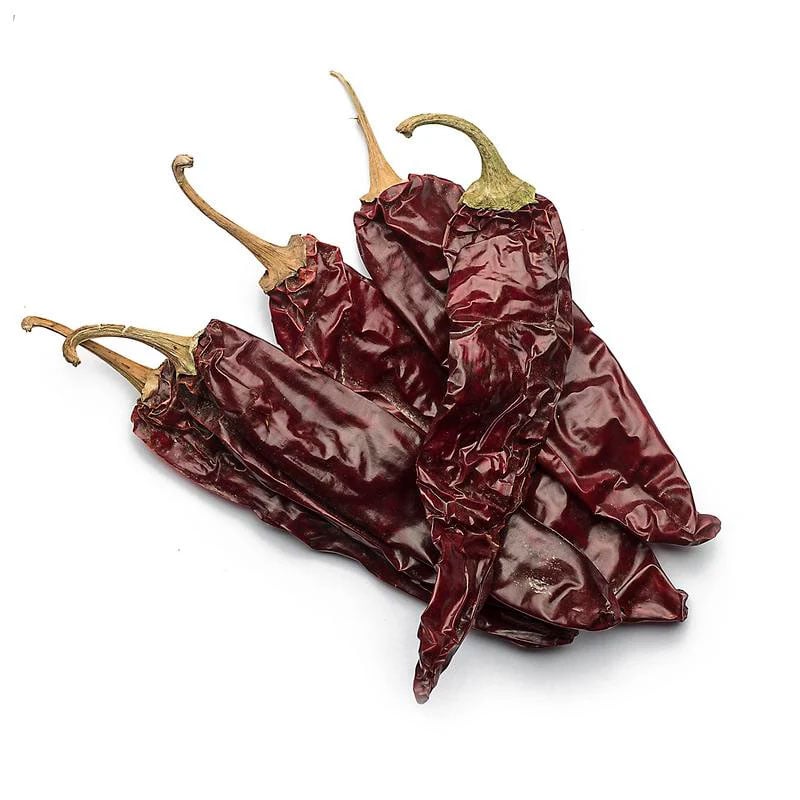
1. Kolocsai Pepper (Paprika)
• Flavor Profile: Sweet, mild, slightly earthy
• Heat Level: Very mild (about 500–1,000 SHU)
• Other Names it is known by: Kalocsa paprika pepper
• Dried/Fresh Use: Usually dried and ground into paprika
• Most common use: Hungarian paprika for soups, stews, and goulash

2. Colorado Chile (Chile Colorado)
• Flavor Profile: Mild, slightly sweet, earthy w/subtle dried fruit notes
• Heat Level: Mild (about 500–2,500 SHU)
• Other Names: California chile, dried Anaheim chile
• Dried/Fresh Use: Dried, or fresh anaheim in chile verde
• Most common use: Red chile sauces, enchilada sauce, stew

3. Ancho
• Flavor Profile: Sweet, earthy, mild heat, plum notes
• Heat Level: Mild (1,000–1,500 SHU)
• Other Names it is known by: Dried Ripe Poblano (when fresh)
• Dried/Fresh Use: Both
• Most common use: Moles, sauces

4. Pasilla
• Flavor Profile: Rich, raisin-like, smoky
• Heat Level: Mild (1,000–2,500 SHU)
• Other Names it is known by: Chilaca (when fresh)
• Dried/Fresh Use: Typically used dried
• Most common use: Mole, sauces

4(b). Chile Negro
• Flavor Profile: Earthy, smoky, sweet dried fruit
• Heat Level: Mild (2,500–3,000 SHU)
• Other Name: Also Pasilla from Chilaca, growing, soil, climate, maturity may differ slightly.
• Dried/Fresh Use: Used dried (fresh is Chilaca)
• Most common use: Sauces, stews

5. New Mexico Chile
• Flavor Profile: Sweet, earthy, mild, lightly smoky
• Heat Level: Mild to Medium (1,000–2,500 SHU)
• Other Names it is known by: Hatch (fresh), Anaheim (related)
• Dried/Fresh Use: Both
• Most common use: Enchilada sauce, stews
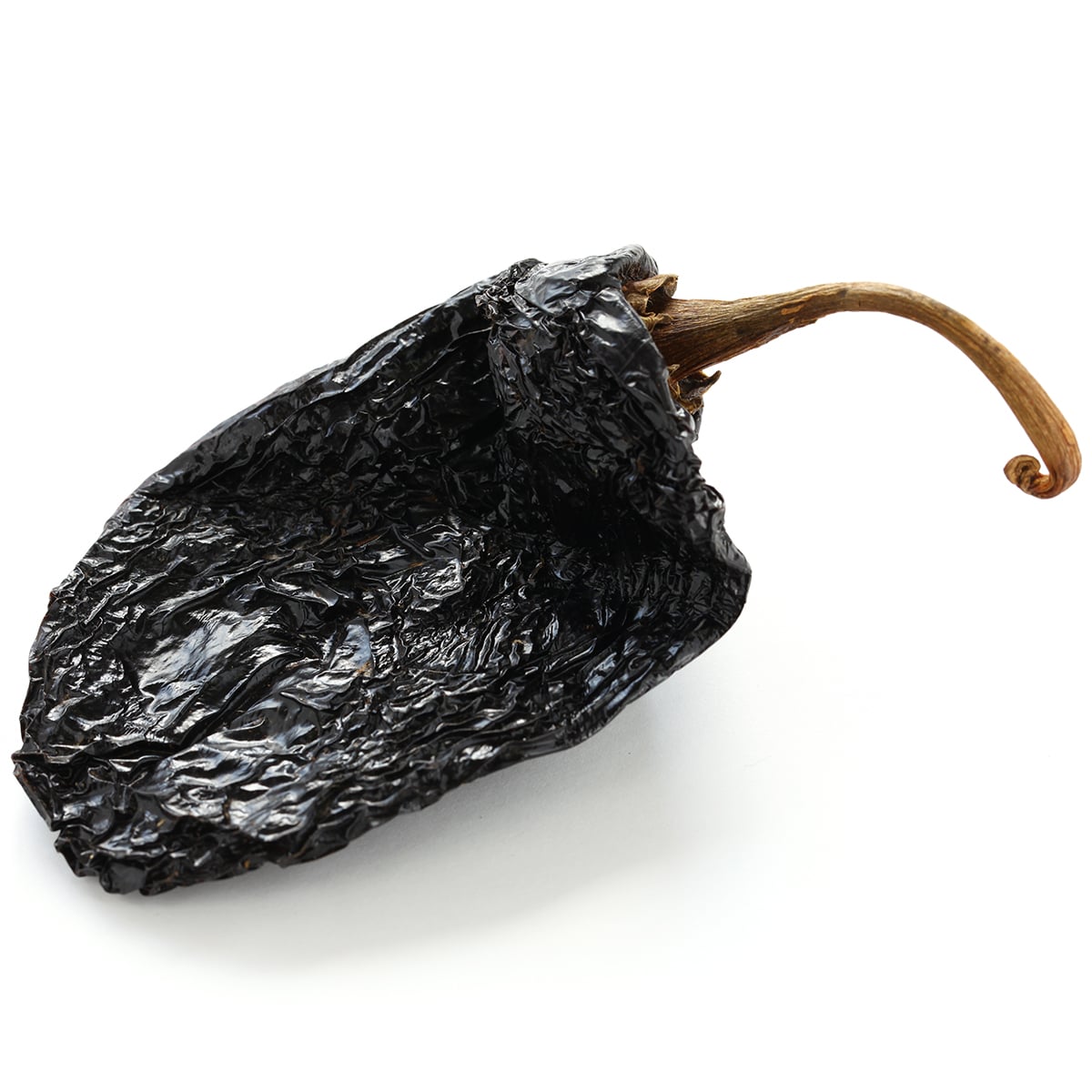
6. Mulato
• Flavor Profile: Deep chocolate, licorice, cherry
• Heat Level: Mild (2,500–3,000 SHU)
• Other Names it is known by: from Poblano (ripened longer, dried darker)
• Dried/Fresh Use: Only used dried
• Most common use: Mole, adobo
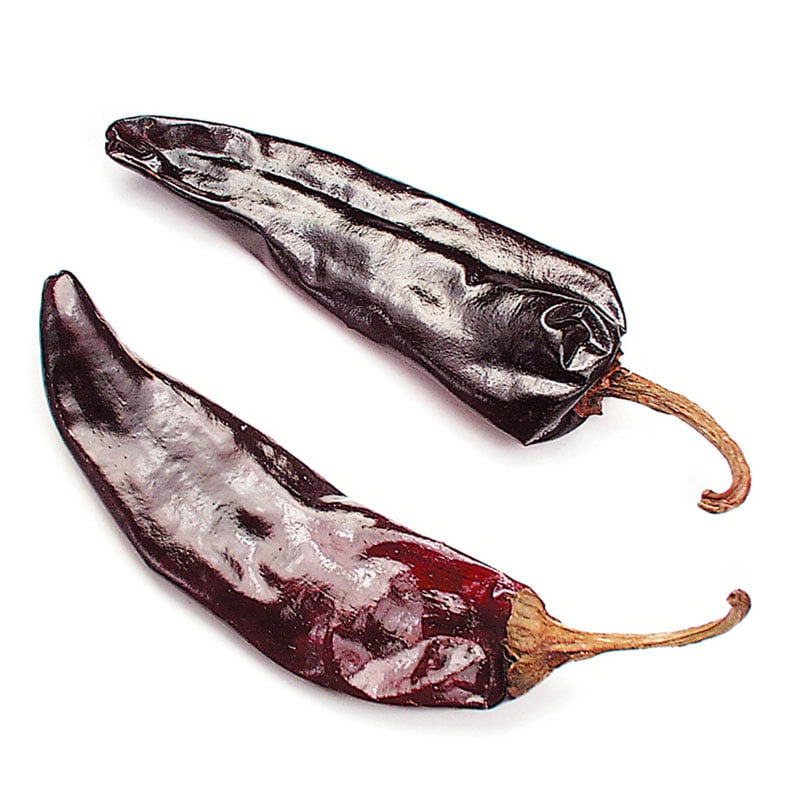
7. Guajillo
• Flavor Profile: Tangy, sweet, berry-like, tea
• Heat Level: Mild–Medium (2,500–5,000 SHU)
• Other Names it is known by: Mirasol (when fresh)
• Dried/Fresh Use: Primarily used dried
• Most common use: Marinades, salsas

8. Cascabel ("little rattle")
• Flavor Profile: Nutty, smoky, slightly tangy
• Heat Level: Mild–Medium (1,500–5,000 SHU)
• Other Names it is known by: Bolita, Chile Bola, Rattle Chile
• Dried/Fresh Use: Usually dried
• Most common use: Salsas, sauces

9. Jalapeño, dehydrated
• Flavor Profile: Bright, green, grassy, slightly sweet
• Heat Level: Medium (3,500–8,000 SHU)
• Process: Low heat dehydration preserves chlorophyll keeping powder green
• Dried/Fresh Use: Both
• Most common use: Seasoning powders, salsas, stuffing

10. Aleppo
• Flavor Profile: Fruity, earthy, cumin-like undertones
• Heat Level: Medium (5,000–10,000 SHU)
• Other Names it is known by: Halaby pepper
• Dried/Fresh Use: Used dried (typically flaked)
• Most common use: Sprinkled on dishes

11. Puya
• Flavor Profile: Fruity, tangy, with sharp heat
• Heat Level: Medium–Hot (5,000–8,000 SHU)
• Other Names: dried Mirasol chile, related to guajillo
• Dried/Fresh Use: Typically dried
• Most common use: Salsas, sauces
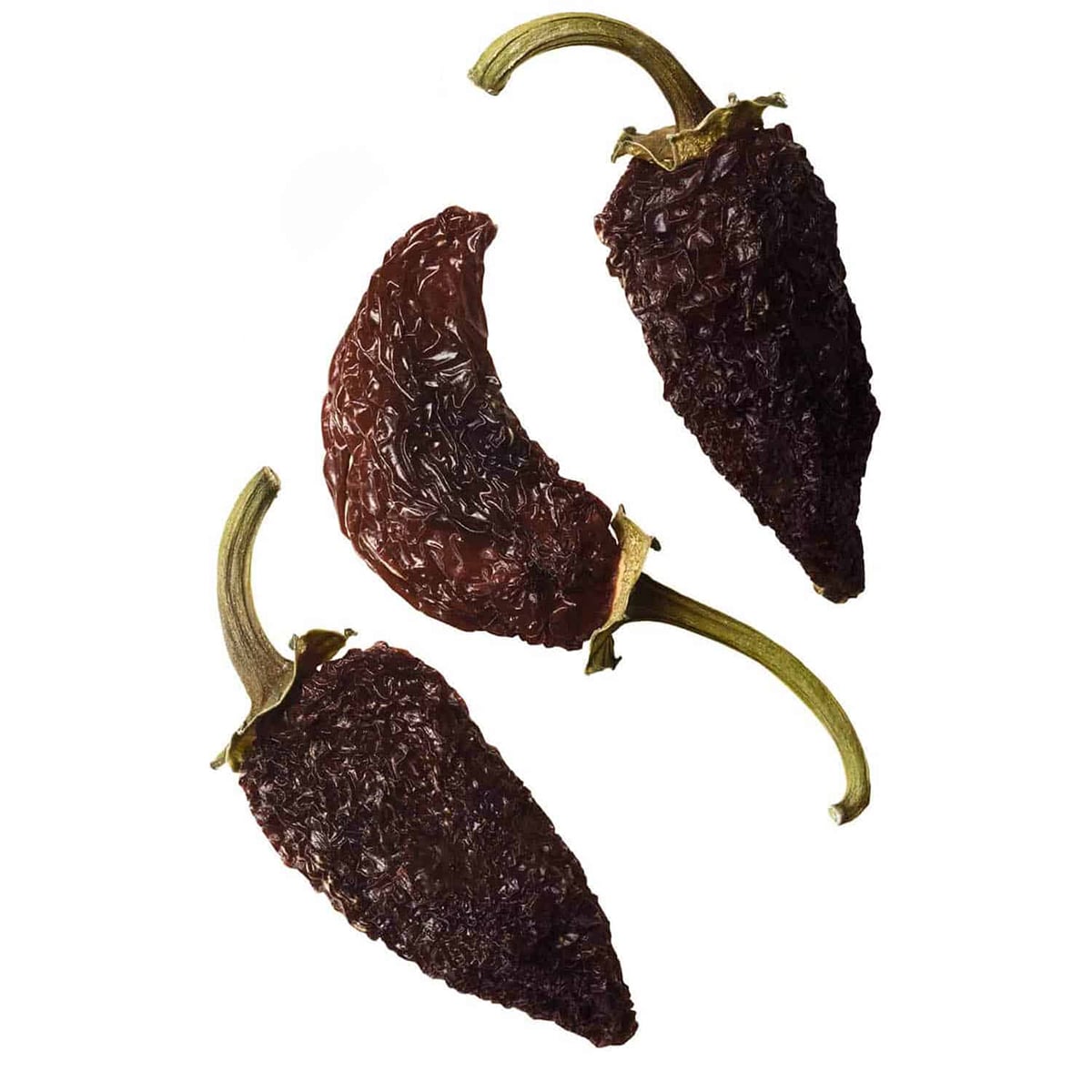
12. Chipotle Morita (dark red burgundy)
• Flavor Profile: Smoky, fruity, slightly sweet
• Heat Level: Medium (5,000–10,000 SHU)
• Other Names it is known by: Smoked red jalapeño
• Dried/Fresh Use: Only used dried
• Most common use: Adobo, sauces, stews

13. Meco Chipotle (tan to grey brown)
• Flavor Profile: Deeply smoky, earthy, strong tobacco notes
• Heat Level: Medium–Hot (5,000–10,000 SHU)
• Other Names it is known by: Chipotle Meco, Chipotle Grande
• Dried/Fresh Use: Only dried, drier/stiffer pods
• Most common use: Barbacoa, slow-cooked meats

14. Chile de Árbol (a favorite!)
• Flavor Profile: Grassy, smoky, sharp
• Heat Level: Hot (15,000–30,000 SHU)
• Other Names: Bird’s beak, Capsicum annuum
• Dried/Fresh Use: Both
• Most common use: Salsas, infused oils

15. Japon (Japanese Pepper)
• Flavor Profile: Sharp, bright, neutral
• Heat Level: Hot (15,000–30,000 SHU)
• Other Names it is known by: Hontaka, Togarashi (related)
• Dried/Fresh Use: Dried, long, narrow, slightly curved
• Most common use: Stir-fries, dipping sauces

16. Cayenne
• Flavor Profile: Neutral, earthy, slightly bitter
• Heat Level: Hot (30,000–50,000 SHU)
• Other Names it is known by: Finger chile
• Dried/Fresh Use: Both
• Most common use: Hot sauces, spice blends

17. Pequin (Piquín)
• Flavor Profile: Fruity, nutty, sharp and fiery
• Heat Level: Very Hot (40,000–60,000 SHU)
• Other Names it is known by: Bird pepper
• Dried/Fresh Use: Typically dried
• Most common use: Vinegars, pickled salsas

18. Thai
• Flavor Profile: Fiery, pungent, slightly sweet
• Heat Level: Very Hot (50,000–100,000 SHU)
• Other Names it is known by: Bird’s Eye, Prik Kee Noo, Capsicum frutescens
• Dried/Fresh Use: Both (small, short, pointed)
- Most common use: Curry pastes, stir-fries

19. Sichuan
• Flavor Profile: Spicy, floral, numbing (thin, narrow)
• Heat Level: Very Hot (50,000–100,000 SHU)
• Other Names: Facing Heaven Pepper, Tien Tsin
• Dried/Fresh Use: Typically dried (thin, narrow)
• Most common use: Chili oil, Sichuan stir-fries

20. Habanero
• Flavor Profile: Tropical fruit, floral, fiery
• Heat Level: Extremely Hot (100,000–350,000 SHU)
• Other Names it is known by: None
• Dried/Fresh Use: Both
• Most common use: Hot sauces, salsas
Final Thoughts on Cooking with Dried Chiles
Dried chiles offer far more than heat. They bring sweetness, smoke, fruitiness, and depth to cooking traditions all over the world.
Once you start recognizing the personality of different chiles, your spice drawer becomes more than a collection of jars. It becomes a toolkit for shaping flavor.
Whether you reach for the gentle sweetness of ancho, the smoky richness of chipotle, or the sharp brightness of chile de árbol, dried chiles allow cooks to layer complexity into everyday dishes.



Leave a Reply